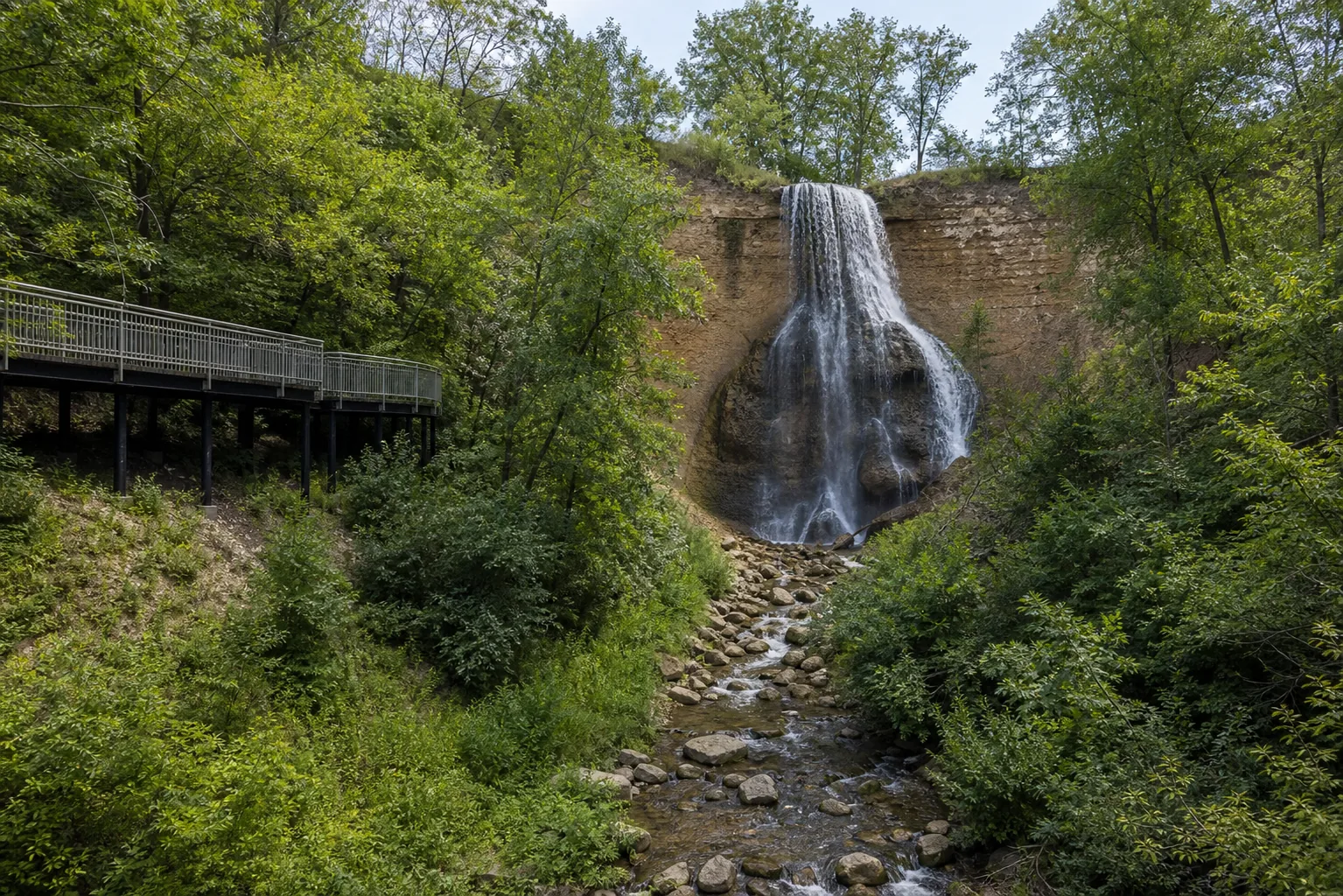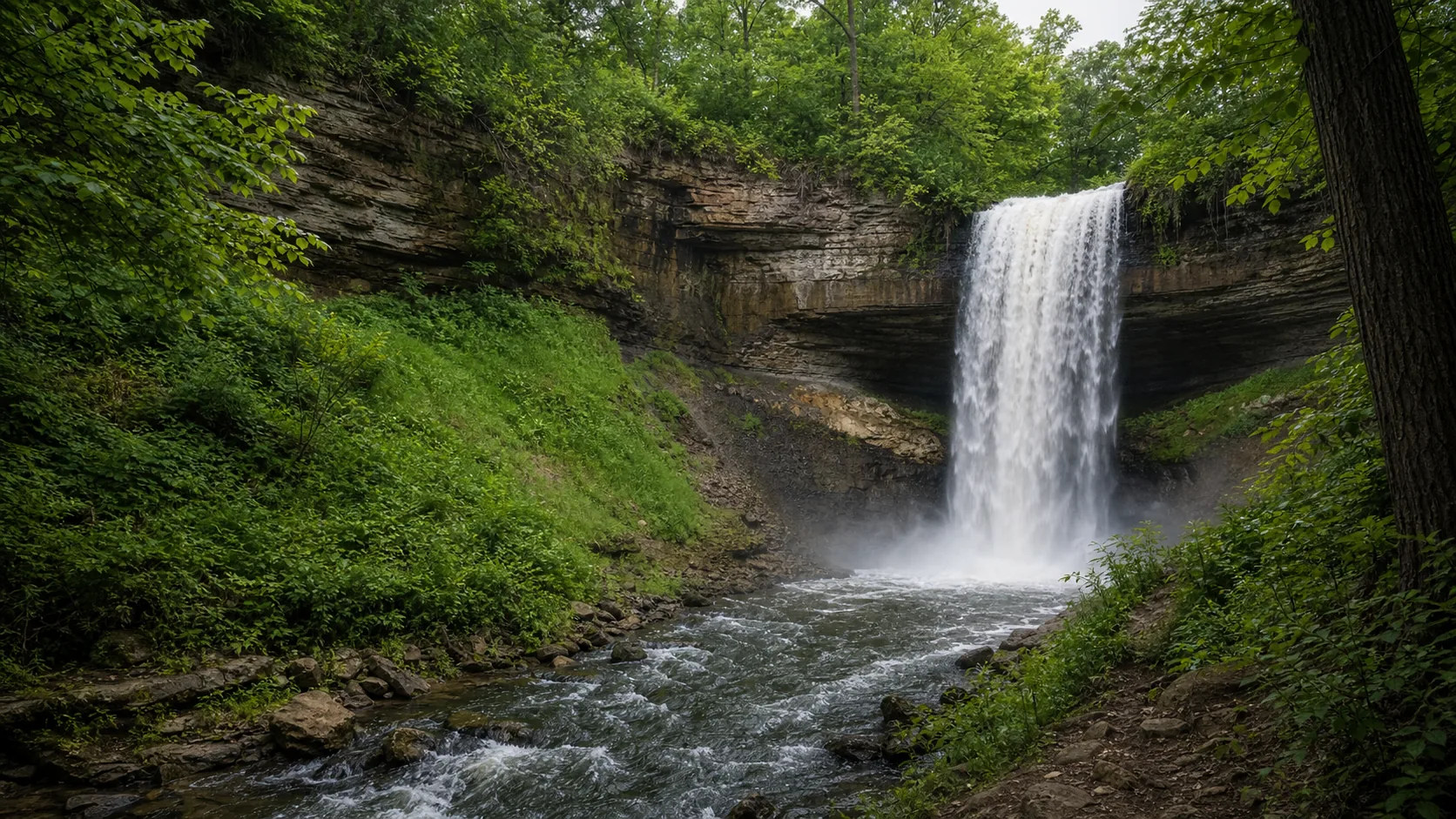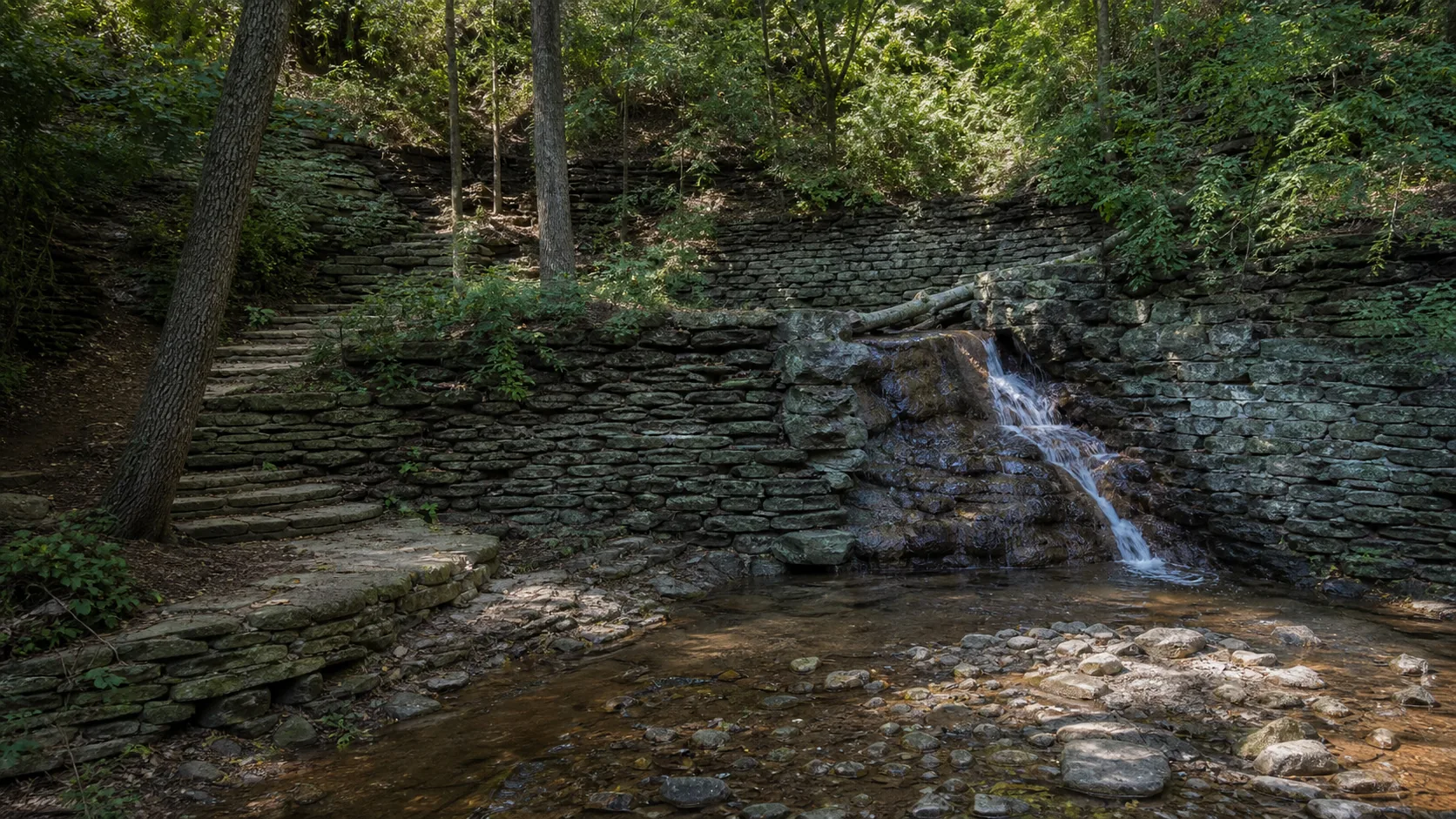
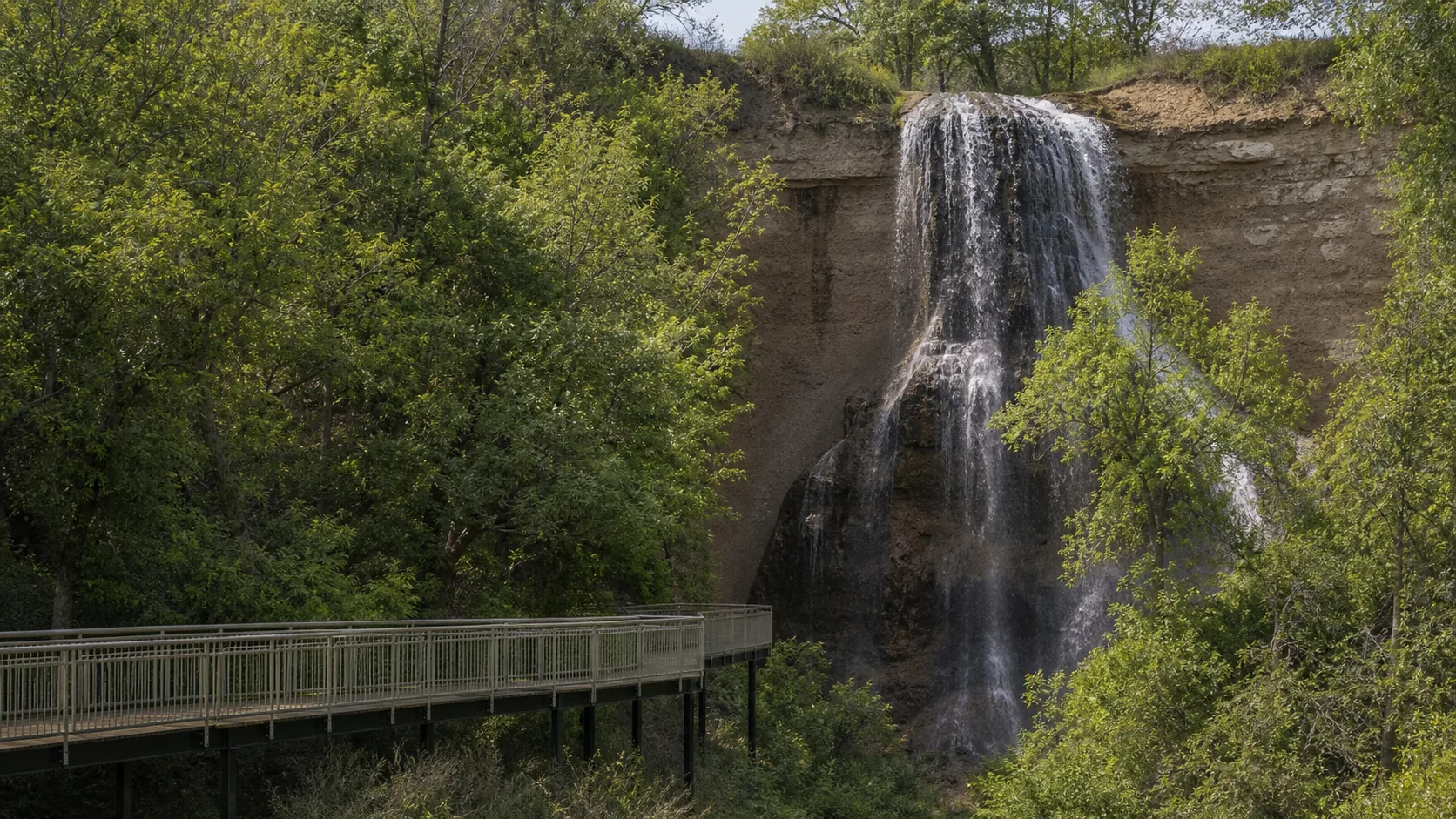
Smith Falls waterfall and surrounding setting
Cherry County, NE

Smith Falls

Smith Falls is Nebraska's tallest waterfall, a 63-foot spring-fed plunge that pours from the Ogallala aquifer over a chalk shelf into the Niobrara National Scenic River. It sits inside Smith Falls State Park, 17 miles east of Valentine in Cherry County, and you reach it on a 0.4-mile walk from the day-use parking lot across a historic one-lane bridge.

Last verified May 12, 2026 Visited Desk-verified May 2026 9 sources checked
Trail 0.8 mi 1.2 mi extended
Time 20-60 min Easy
Best season Late May to early October; spring-fed flow is constant year-round but park gates are seasonal Constant year-round (spring-fed)
Parking $8 daily NE State Parks vehicle permit (resident) or $11 (non-resident); $35 resident annual covers all Nebraska state parks Smith Falls State Park
Quick answer

Is Smith Falls worth visiting?

Yes if you want to settle the question of whether Nebraska has a real waterfall; the 63-foot drop is genuinely the tallest in the state and the spring-fed source means it runs the same volume in October that it runs in May. The reliable window is late May through Labor Day when the entry gate is staffed and the Niobrara tubing concessions are running. Plan on the $8 Nebraska State Parks daily vehicle permit ($11 non-resident), plus separate tube or canoe rental if you want to float the river.

  • Nebraska's tallest waterfall (63 ft)
  • Spring-fed, runs year-round
  • 0.4 mi walk from the lot
  • $8 NE State Parks daily permit
  • Niobrara tubing put-in
  • Best window: late May to early October
Last verified May 12, 2026 Visited Desk-verified May 2026 9 sources checked
Distance 0.8 mi 1.2 mi extended
Round trip 20-60 min Flat boardwalk and dirt path, one historic bridge crossing over the Niobrara River, then a short staircase to the falls viewing platform
Difficulty Easy Flat boardwalk and dirt path, one historic bridge crossing over the Niobrara River, then a short staircase to the falls viewing platform
Location Cherry County, NE Smith Falls State Park
Parking $8 daily NE State Parks vehicle permit (resident) or $11 (non-resident); $35 resident annual covers all Nebraska state parks NGPC
Transit No fixed-route transit verified Nearest scheduled service is Amtrak's Empire Builder in Wood River 130 mi south; drive only from Valentine · 0 ft
Drive 17 mi 25 min from downtown
Best season Late May to early October; spring-fed flow is constant year-round but park gates are seasonal Constant year-round (spring-fed)
Smith Falls base and water force
Photo guide

Three working angles of a 63-foot spring-fed plunge.

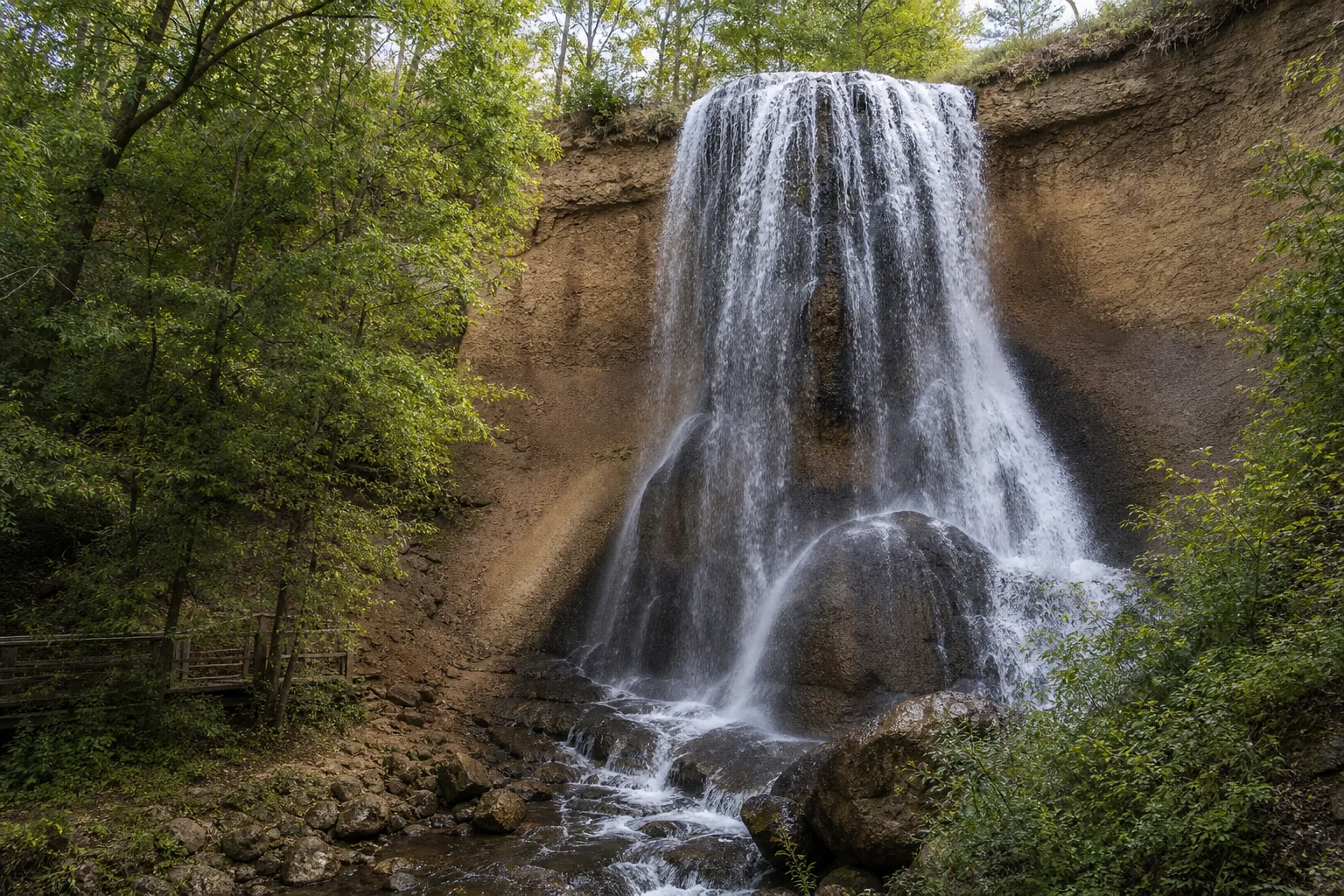
The frontal view from the wooden platform is the obvious shot, the side angle from the boardwalk shows the chalk alcove and the moss, and the top-down view from the upper bench is the one most visitors miss. Use the captions to pick angles before you commit to the walk.

Smith Falls waterfall and surrounding setting
Smith Falls, hero composition
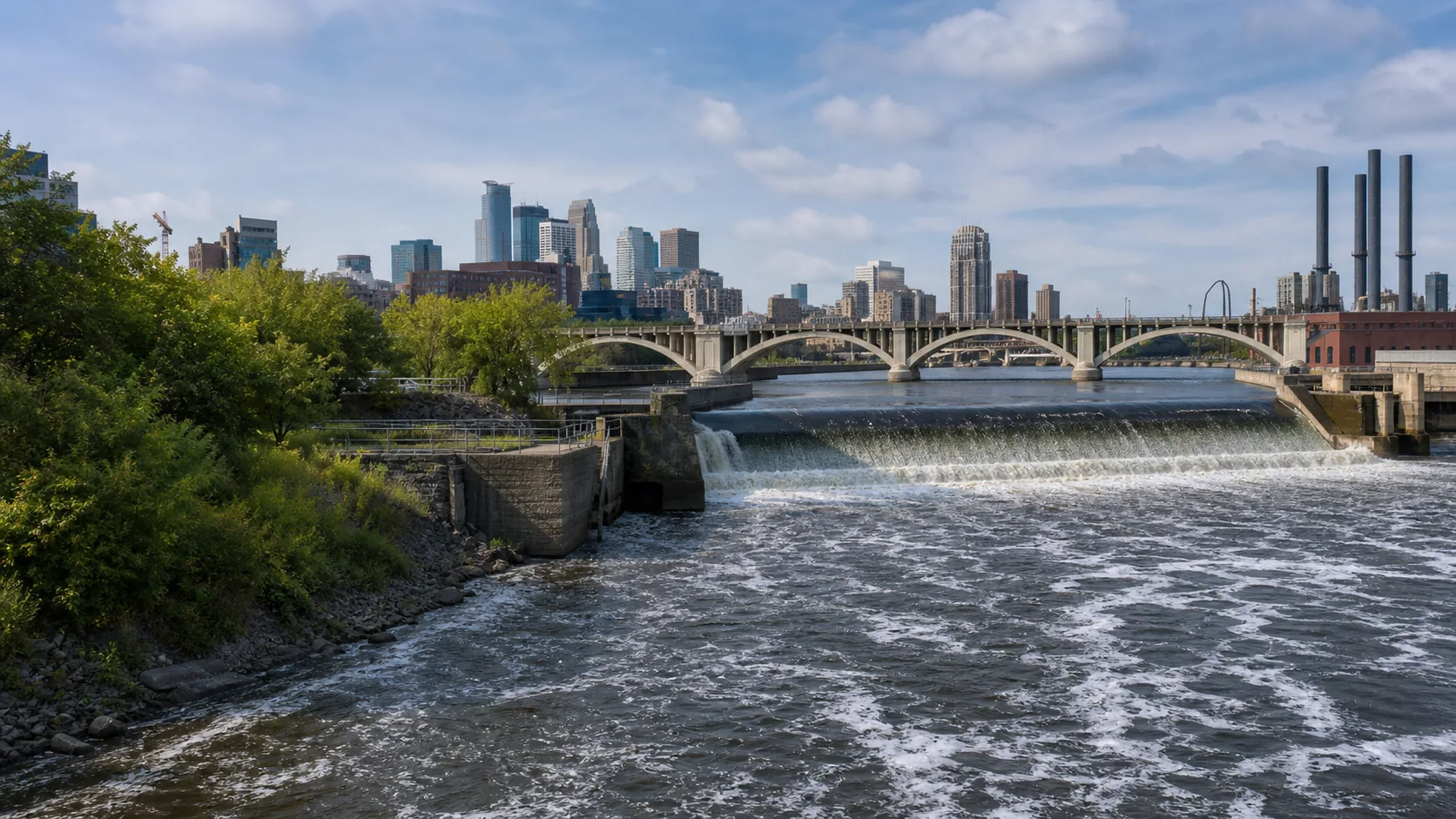
Smith Falls wide setting view
Wide setting view
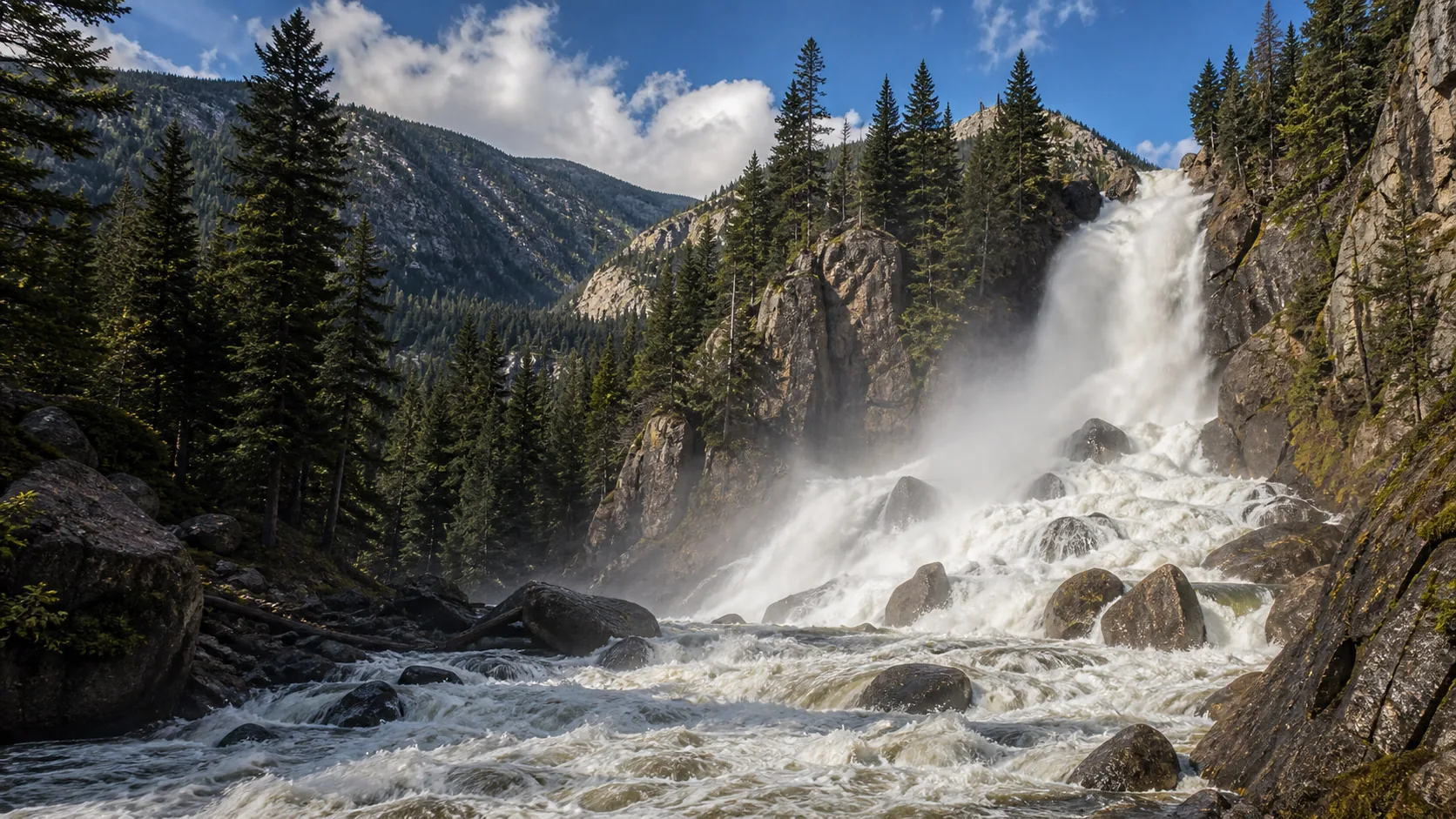
Smith Falls base and water force
Base and water force
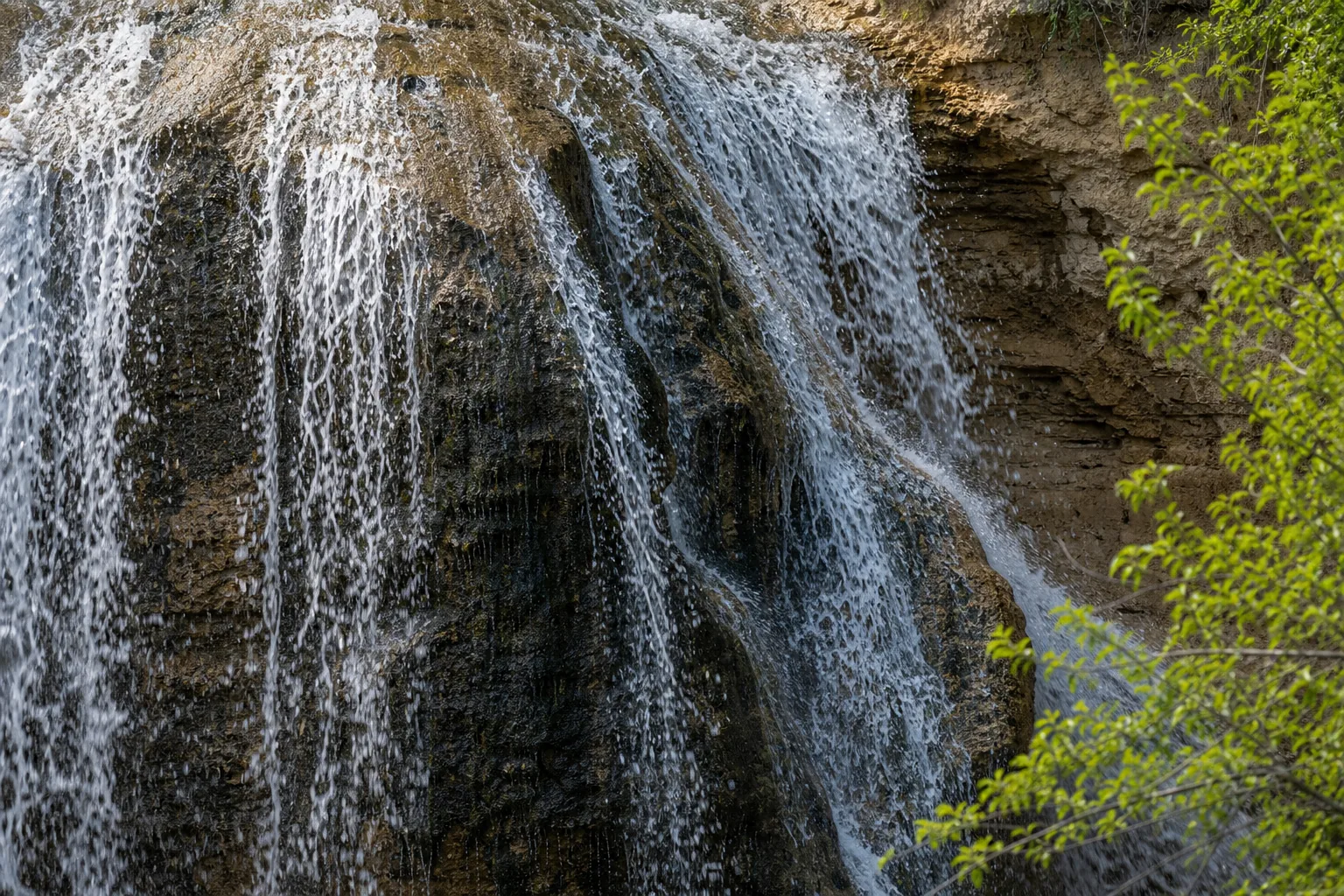
Smith Falls water and rock detail
Water and rock detail
01Is Smith Falls flowing right now?

Smith Falls flow is effectively constant because the source is the Ogallala aquifer rather than surface runoff. The live discharge chip on this page reads from USGS gauge 06461500 (Niobrara River near Sparks) ↑, which sits a few miles upstream of the park. That number tracks the river, not the falls; for the falls itself you can assume reliable year-round flow at canyon-floor temperature (~52 F) unless an extreme drought year is reported by NGPC.

02How long is the walk?

The route to the falls is a 0.4-mile boardwalk and packed-dirt path from the day-use lot, across the historic Verdigre Creek bridge over the Niobrara River, to a viewing platform at the base of the cascade. Round trip is about 0.8 mi with one short flight of wooden stairs at the platform.

03How do you get there?

Smith Falls State Park is at 90165 Smith Falls Road, off Highway 12 about 17 miles east of Valentine, Nebraska. Turn south from Hwy 12 onto Smith Falls Road; the park entrance and seasonal gate are about 3 miles in. The closest commercial airport is Miller Field in Valentine (VTN) with limited service; most visitors drive from Lincoln (5 hours east) or Rapid City (3.5 hours west).

04Is there free parking?

All Smith Falls parking is inside the park gate and requires a $8 daily Nebraska state-parks vehicle permit (resident) or $11 (non-resident); an annual permit is $35 (resident) and covers all NE state parks. The day-use lot near the trailhead has roughly 60 spaces and fills by mid-morning on summer Saturdays.

05Does it cost money?

Yes. The Nebraska state-park entry permit applies year-round. The permit is sold at the gate, online through the NE Game and Parks system, or at any other Nebraska state park. Tubing on the Niobrara is a separate cost through private outfitters in Valentine, typically $20 to $35 per person for a half-day trip.

06Trail variants

Falls boardwalk out-and-back 0.8 mi round trip, 20-30 min, from the day-use lot across the Verdigre Creek bridge to the viewing platform.
Falls plus river-overlook loop 1.2 mi, 45-60 min, adds the upper bench above the falls and a north-rim view of the Niobrara.
Tubing put-in at Smith Falls river trip varies (3-12 mi downstream), 2-6 hr, park is a popular take-out and put-in for Niobrara tubing and canoe trips.
Winter walk-in 0.8 mi plus the road from the gate, 60-90 min, after the seasonal gate closes the falls is still reachable on foot if conditions allow.

Detailed maps and recent reviews: Falls route on AllTrails · Creek route on AllTrails

07Can you swim?

Standing under the falls is informally tolerated on hot days but the chalk is slick with algae and the platform is narrow; the safer swim and float zone is the Niobrara River itself, which is a National Scenic River and the actual draw for most summer visitors.

08Are dogs allowed?

Yes, on leash. Dogs are allowed on the boardwalk, the bridge, the falls platform, the campground, and the river beach. Carry water; the canyon traps heat and there is no shade between the lot and the bridge.

09Is it accessible?

The day-use area and pavilion are accessible. The 0.4-mile route to the falls is mostly boardwalk and crushed limestone but includes a short flight of wooden stairs at the viewing platform; the upper bench is reached by a steeper trail and is not accessible. The historic bridge has a 6-foot-wide deck and works for wheelchairs but not wide mobility scooters.

Field notes

Smith Falls at a glance.

63-foot spring-fed plunge from the Ogallala aquifer over the Niobrara Formation chalk, inside a 244-acre state park within the Niobrara National Scenic River. Managed by Nebraska Game and Parks Commission. $8 daily resident vehicle permit. 17 miles east of Valentine, NE.

Height 63 ft USGS 3DEP
Type Plunge (spring-fed) USGS
Rock Ogallala Group sands and gravels over Niobrara Formation chalk Conservative geology note
County Cherry Cherry County, NE
Managed by Nebraska Game and Parks Commission NGPC
Water source Ogallala (High Plains) aquifer spring; falls into the Niobrara River USGS
Elevation 2280 ft USGS NED
Park area 244 acres NGPC
Hours Day use 6 a.m. to 10 p.m.; main entrance and bridge typically open mid-May through Labor Day, with reduced shoulder-season access in spring and fall NGPC
When to visit

The narrow window the park gate makes for you.

Because Smith Falls is spring-fed, the water itself is reliable year-round. The constraint is the park gate, which is typically staffed mid-May through Labor Day with reduced shoulder-season access. Late June through mid-August is the busy tubing window. October weekday mornings are the photographer's secret window.

PEAK FLOW

Peak flowConstant year-round (spring-fed)
Ice / low flowPartial ice fringes Dec-Feb
Most crowdedWeekends and midday
Best photosSunrise or weekdays

Live water context

Discharge data -- Live reading from Niobrara River near Sparks, NE (USGS 06461500) refreshes on the next build. Open the gauge link below for the current cubic-feet-per-second reading.

USGS 06461500 · Niobrara River near Sparks, NE

Why is it called Smith Falls?

The falls and the park are named for Frederick Smith, a homesteader who claimed the land along this stretch of the Niobrara River canyon in the 1880s. Smith ran a small farm above the cataract for decades and the cascade carried his surname on county maps long before there was a state park.

In 1991 the state of Nebraska acquired the property and the adjoining land to create Smith Falls State Park, dedicated on June 11, 1992 as Nebraska's then-newest state park. The naming has stuck for more than 130 years; the only common confusion is with Smiths Falls, the town in eastern Ontario, which is unrelated.

What else to do at Smith Falls State Park

Smith Falls State Park is 244 acres of Niobrara River canyon and Sandhills prairie about 17 miles east of Valentine on Highway 12. The park is small, the falls is on the south side of the river, and the entire setting is wrapped inside the Niobrara National Scenic River corridor, the 76-mile reach Congress designated in 1991 because it is one of the most biologically diverse rivers on the Great Plains. Valentine, population around 2,600, is the base town for almost every visitor; gas, groceries, and tubing outfitters are all there.

  • The historic Verdigre Creek bridge. A single-lane steel-truss bridge across the Niobrara built in 1909 and moved here in the 1990s; the walking route to the falls crosses it.
  • Falls viewing platform. Wooden deck below the alcove at the base of the 63-foot drop, reached by a short staircase at the end of the boardwalk.
  • Tubing put-in and take-out. Cherry County tubing outfitters use Smith Falls as one of the standard Niobrara river-trip endpoints in summer.
  • Primitive campground. 24 tent sites and a handful of walk-in sites along the river; reservation-only through the Nebraska state-parks system in peak summer.
  • Day-use shelter and pavilion. Restrooms and shaded tables at the trailhead; the only flush facilities inside the park.

Why it looks this way

Smith Falls is a spring waterfall, not a stream waterfall, which is the single most important fact about it. Groundwater from the Ogallala Group, the same High Plains aquifer that irrigates most of Nebraska's corn belt, percolates south through the Sandhills until it reaches the canyon wall of the Niobrara River, then daylights as a perched spring along the contact with the underlying Niobrara Formation, a Late Cretaceous chalk. The chalk is soft, so the water has carved a shallow alcove and a stepped plunge over the past several thousand years. Because the source is aquifer storage rather than surface runoff, flow is essentially constant year-round at roughly 52 degrees F, which is why the falls runs in August droughts and rarely freezes solid in January.
Field guide deep dive

What an honest Smith Falls guide tells you that a tourism page will not.

Aquifer geology, the tubing-corridor context, the seasonal gate window, the real meaning of "tallest in Nebraska," and the photo angles that work in soft prairie light. Skim the headers, read what you need.

How Smith Falls formed: an aquifer that meets a chalk wall

Most Great Plains waterfalls do not exist, and the geological reason is the same one that makes Smith Falls so unusual when you actually stand in front of it. The Plains were planed flat by glacial outwash and the slow, low-gradient meandering of rivers like the Niobrara and the Platte. There are very few caprock-undercut ledges of the kind that produce a Minnehaha or a St. Anthony. What the Plains do have, hidden under your feet, is one of the largest aquifers in the world: the Ogallala Group, also called the High Plains aquifer, which underlies most of Nebraska and parts of seven other states. Smith Falls is what happens when that aquifer hits an edge.

The edge is the south wall of the Niobrara River canyon. The Niobrara has cut about 200 feet down through Quaternary sands and gravels of the Ogallala Group and into the Late Cretaceous Niobrara Formation, the chalky limestone that gives the river its name. Groundwater stored in the porous Ogallala sands percolates southward through the Sandhills until it reaches the canyon wall, where the chalk acts as a partial confining layer. The water cannot keep moving south, so it daylights as a perched spring along the contact and falls 63 feet over the chalk shelf into a shallow alcove the water has carved over thousands of years.

That mechanism is why the falls runs at the same volume in October that it runs in May. It is not snowmelt water, it is not even particularly recent rainwater; some of it is decades old by the time it emerges. The aquifer temperature is roughly 52 degrees F year-round, so the water that hits the chalk shelf in August is the same temperature as the water that hits it in February. That is also why the falls rarely freezes solid: the source is too warm and the flow is too constant for the canyon to ice the whole 63 feet shut. Expect heavy ice fringes and a bearded crust on the moss in deep winter, not a frozen column.

Is Smith Falls really Nebraska's tallest waterfall?

Yes, and the claim is worth verifying because Nebraska is not a waterfall state and the gap between first and second is large enough that the question is essentially settled. Wikipedia, the National Park Service Niobrara unit page, Nebraska Game and Parks, and Visit Nebraska all list Smith Falls at 63 feet as the tallest. Some sources round up to "almost 70 feet" but the surveyed figure is 63.

The next-tallest waterfalls in Nebraska are essentially all on the same stretch of the Niobrara River, including Fort Falls inside Fort Niobrara National Wildlife Refuge, Stairstep Falls, Berry Falls, Norden Chute, and several unnamed seasonal cascades along tributary creeks. Most are in the 20- to 50-foot range and most are also spring-fed for the same Ogallala reason. Outside the Niobrara canyon, Nebraska's waterfalls drop to creek-pourover scale, often only a few feet.

It is fair to say that the bar for "tallest in Nebraska" is lower than the bar for tallest in, say, Oregon or New York. But the claim itself is not marketing. Smith Falls is real, it is 63 feet, and the photo you take from the platform will not be cropped to look bigger than it is.

The Niobrara River tubing scene and why everyone shows up in July

If the parking lot is full when you arrive, the reason is rarely the falls. The reason is the Niobrara River, which most of Nebraska treats as the state's flagship summer destination. The Niobrara National Scenic River, designated by Congress in 1991, is a 76-mile reach from below the Borman Bridge near Valentine to the Highway 137 bridge east of Norden. The river is shallow, warm-bottomed, and slow enough to tube without much skill, which has produced a tubing economy that operates more or less continuously from Memorial Day to Labor Day.

Smith Falls is one of the most popular put-in or take-out points on the upper reach. Outfitters in Valentine, including Sunny Brook Camp, Little Outlaw, Graham Canoe Outfitters, and several smaller operators, run shuttle vans and rent tubes, canoes, and kayaks for trips that range from a 3-mile float (Cornell Bridge to Smith Falls, about 2 hours) to a 12-mile float (Sunny Brook to the Berry Bridge, about 6 hours). Expect to pay roughly $20 to $35 per person for a half-day trip with shuttle, more for longer trips and for canoes.

The practical implication for falls-first visitors: arrive before 10 a.m. on summer weekends if you want a calm photo, and try a weekday in early June or after Labor Day if you can. The river is gorgeous and you should consider tubing it, but the parking lot character of the park changes substantially between sunrise and noon on a hot July Saturday.

Park hours, the seasonal gate, and the $8 entry permit

Smith Falls State Park is open daily from 6 a.m. to 10 p.m. when the gate is staffed. The gate window is the thing that catches out-of-state visitors most often. The full park experience, including vehicle access to the day-use lot near the trailhead and to the campground, is typically available from mid-May through Labor Day weekend, with a tapered shoulder season in spring and early fall. Outside that window the entrance road may be gated and walk-in access from Highway 12 is the only option; the falls itself is still there and the route still works, but you add roughly a mile of road walking each way.

The entry fee is the Nebraska State Parks vehicle permit, which is $8 daily for residents, $11 daily for non-residents, and $35 annually for residents (an annual non-resident permit is also available and costs more). The permit is required at every Nebraska state park, sold at the gate, online through the Game and Parks system, and at any other Nebraska state-park entrance. There is no separate hike-in or per-person fee; the permit is per vehicle.

Other costs to plan around: tubing rental and shuttle (private outfitters, $20 to $35 per person), campground reservation (about $15 to $25 per night for tent sites, reserved through ReserveAmerica), and any commercial photography or drone permit through Game and Parks. There is no entry-line cash-only constraint; cards work at the gate.

Wildlife, prairie context, and what the canyon actually holds

The reason Congress designated the Niobrara as a National Scenic River in 1991 is biodiversity, not scenery. The canyon sits at the convergence of six ecosystems (northern boreal forest at the eastern edge of its range, eastern deciduous forest at the western edge of its range, Sandhills prairie, mixed-grass prairie, tallgrass prairie, and Rocky Mountain ponderosa pine), which is unusual in North America and the reason University of Nebraska researchers have spent decades studying the canyon as an ecological crossroad.

What that means at the park: river otters, reintroduced to the Niobrara starting in 1986 and now common, are most easily seen at dawn from the river beach near the campground. Wild turkeys work the burr-oak draws on the canyon rim. Sharp-tailed grouse and greater prairie chickens hold leks on the prairie above the canyon in April. The Niobrara itself supports a fishery that includes channel catfish, smallmouth bass, and (in the lower reaches) shovelnose sturgeon. Mountain lions and elk are documented in the broader Niobrara corridor but uncommon at the park itself.

For a casual visitor the most reliable wildlife sightings are turkey vultures over the canyon rim in the warm months, white-tailed deer in the prairie meadows at dawn and dusk, and belted kingfishers along the river just downstream of the falls. Bring binoculars if you have them; the canyon is shallow and the sightlines are good.

Photographing Smith Falls in honest prairie light

Smith Falls is not a high-volume waterfall and a long exposure that tries to silk-blur it the way you would Niagara will just make the cascade disappear. Treat it the way you would treat a Sierra spring waterfall: short-to-medium shutter, enough detail in the moss and the chalk to anchor the cascade, and a foreground that includes the canyon rather than just the water.

The frontal view from the wooden platform is the postcard shot. It is at the base, looking up, with the chalk alcove framing the cascade. The side angle from the boardwalk a few yards back shows the moss-coated chalk shelves and the canyon wall in profile and is the more interesting frame for a portfolio. The upper-bench viewpoint, reached by a steeper trail above the falls, is the rare top-down angle and reads as a strong contrast to the obvious frontal shot.

The third shot most people miss is the canyon foreground rather than the falls: the historic Verdigre Creek bridge, the river bend below the bridge, and the burr-oak draw on the north canyon wall are what make this a Nebraska photo rather than a generic small cascade. If you only have 30 minutes, do the platform shot, walk back to the bridge, and put the bridge in the foreground with the canyon receding behind it. The result reads as place rather than just water.

For Great Plains waterfall context, see also our guide to Sitting Bull Falls in New Mexico (another canyon-spring waterfall in a high desert) and Minnehaha Falls in Minneapolis (the Upper Midwest's most famous urban waterfall, on a related Cretaceous-era caprock geology). For a Mississippi-drainage pair, St. Anthony Falls and Hidden Falls in the Twin Cities are reachable in a long day from Valentine if you are crossing the region.

Map and route

Seventeen miles east of Valentine on Highway 12.

Smith Falls State Park is at 90165 Smith Falls Road, off Highway 12 about 17 miles east of Valentine, Nebraska. Turn south from Hwy 12 onto Smith Falls Road; the park entrance and seasonal gate are about 3 miles in. The closest commercial airport is Miller Field in Valentine (VTN) with limited service; most visitors drive from Lincoln (5 hours east) or Rapid City (3.5 hours west).

Photography and weddings

North-facing chalk alcove, three working positions, NPS no-drone rule on the river.

There are three working positions at Smith Falls. The viewing platform at the base is the postcard angle (head-on, low, chalk alcove framing the cascade). The boardwalk approach gives a cleaner side angle with the moss and the canyon wall in profile. The upper bench above the falls is the unusual top-down view, which is rare among Great Plains waterfalls and reads as a strong contrast to the obvious frontal shot.

The falls faces roughly north, sits inside a shaded chalk alcove, and stays out of direct sun for most of the day, which is forgiving for exposure. Bright midday under prairie sky is the worst light because the canyon rim outside the alcove blows out white. The best window is the first two hours after sunrise (warm cross-light on the chalk) or an overcast afternoon. The Niobrara canyon foreground, not the falls itself, is where the prairie-river-canyon character really shows.

Casual personal photography is fine. Commercial shoots and any drone flight need a Nebraska Game and Parks permit; the park also sits inside the Niobrara National Scenic River unit, where the National Park Service prohibits recreational drone use under NPS Policy Memorandum 14-05.

Permits

Weddings and engagements

Smith Falls is a small canyon spot that works for elopements and short ceremonies more than full receptions; the day-use shelter is the only built event space.

Nebraska Game and Parks charges a special-use permit fee starting at $50 for small ceremonies, with larger groups, amplified sound, and reception use requiring a separate facilities reservation.

Build around the Niobrara River canyon backdrop and the historic bridge rather than the falls itself; the viewing platform is narrow and gets cycled through by tubing groups in summer.

Related questions

More questions visitors ask before driving to Smith Falls.

Tallest-in-Nebraska claim, fees, hours, dogs, swimming, hike length, and the actual gate-open dates. The full set is indexed in FAQ schema for AI answer engines.

01How do you get to Smith Falls?

Use the map for orientation, then verify the current Smith Falls trailhead, parking area, and legal public access before driving.

02What is the best time to visit Smith Falls?

The best time to visit Smith Falls is usually spring through fall, with overcast light often best for photos.

03Are the photos on this page really Smith Falls?

Yes. The photo set is selected to match Smith Falls, and the photo audit keeps unrelated park-context images out of the waterfall slots.

04Is Smith Falls good for families?

Smith Falls can be a good family stop when the official route is open and conditions are dry, but check distance, barriers, footing, and water safety first.

Sources and data

Where the Smith Falls guide gets its facts.

Park rules and fees from the Nebraska Game and Parks Commission Smith Falls page. River-flow proxy from USGS NWIS gauge 06461500. Geology and aquifer description from the Nebraska Conservation and Survey Division and the USGS Ogallala Group description. Etymology and dedication date from Nebraska state-park records and the Wikipedia entry, cross-referenced with Visit Nebraska.

USGS Streamflow: 06461500 Niobrara River near Sparks, NE waterdata.usgs.gov
NGPC: Smith Falls State Park outdoornebraska.gov
Access, parking, and permit rules: outdoornebraska.gov
Conservative geology note: Cherry County bedrock outdoornebraska.gov
NOAA/NWS forecast grid LBF/86,119 noaa.gov
USGS National Elevation Dataset 3DEP
Google Maps: embedded map and directions maps.google.com
Google Places: nearby restaurants and hotels places API
Wikimedia Commons - Smith Falls images commons.wikimedia.org
NOAA/NWS forecast grid weather.gov
SERP reference - outdoornebraska.gov outdoornebraska.gov
SERP reference - visitnebraska.com visitnebraska.com
SERP reference - en.wikipedia.org en.wikipedia.org
Fact checks
Keyword pass: page targets Smith Falls guide, Smith Falls trail, Smith Falls photos, Smith Falls map, parking, directions, and best time to visit.
Photo audit: waterfall slots use exact Wikimedia Commons files matched to Smith Falls; unrelated park context photos are excluded from waterfall slots.
Flow audit: no live flow chip is shown unless a gauge is manually paired and verified.
Access audit: fee, swimming, dog, and accessibility copy is conservative unless the page has a specific source.
Corrections: [email protected]