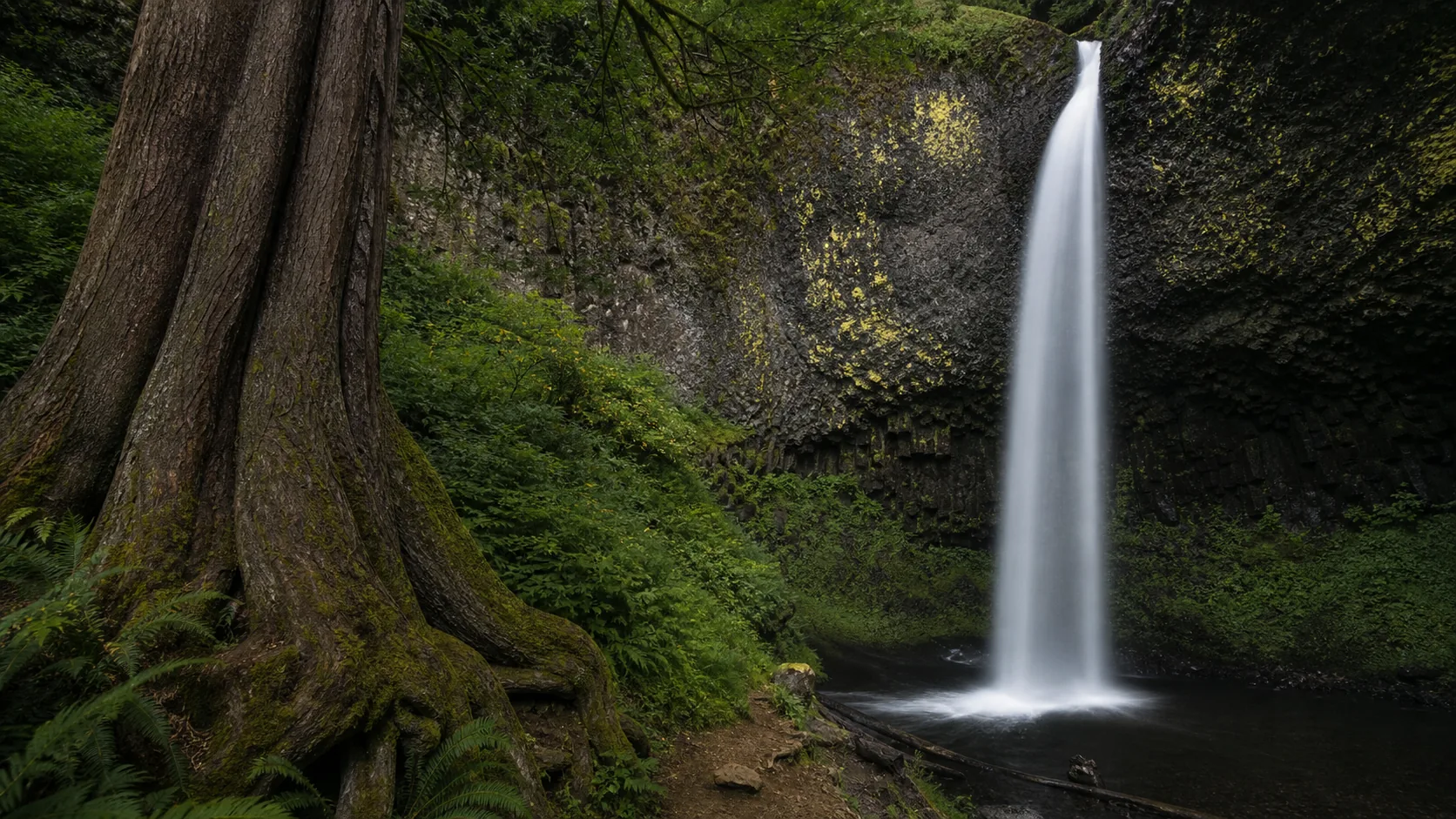
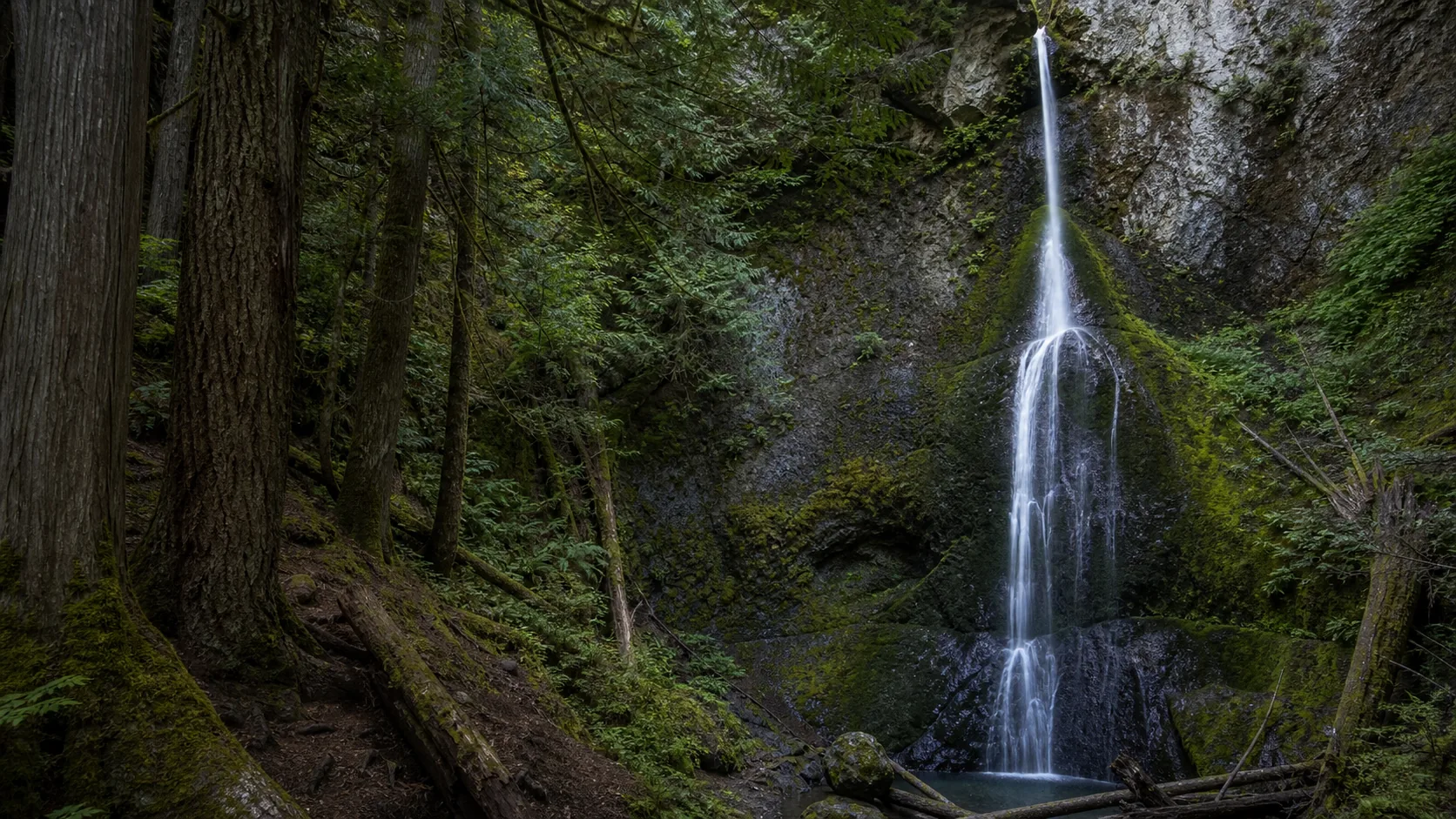
Marymere Falls 90-foot horsetail on Falls Creek in old-growth forest, Olympic National Park
Clallam County, WA

Marymere Falls

Marymere Falls is a 90-foot horsetail on Falls Creek in Olympic National Park, reached by a 0.9-mile trail that starts at the Storm King Ranger Station on Lake Crescent and climbs gently through old-growth Western Hemlock, Western Red Cedar, and Douglas Fir. It is the headline short hike on the lake and the easiest way to see real Olympic Peninsula rainforest geology without committing to a backcountry day.

Last verified May 12, 2026 Visited Desk-verified May 2026 8 sources checked
Trail 1.8 mi 2.0 mi extended
Time 45-90 min Easy
Best season Year-round; peak flow April through June April through June (snowmelt)
Parking Free parking at Storm King Ranger Station with $30/vehicle Olympic National Park entrance; arrive before 10 a.m. on summer weekends or use the Lake Crescent Lodge overflow Olympic National Park
Quick answer

Is Marymere Falls worth visiting?

Yes. The trail is open year-round, peaks for water volume from April through June on snowmelt out of the Mount Storm King drainage, and is busiest from mid-July through Labor Day when Lake Crescent runs at capacity. Entrance is $30 per vehicle for Olympic National Park (valid 7 days) or covered by the $80 America the Beautiful pass; the trail itself is free once you are in the park.

  • 1.8 mi round trip from Storm King Ranger Station
  • Peak flow: April through June (snowmelt)
  • $30/vehicle Olympic NP entrance (7-day pass)
  • Two footbridges and a 200-ft climb to railed viewpoints
  • No dogs anywhere on the trail
  • Pair with Lake Crescent Lodge or Mount Storm King
Last verified May 12, 2026 Visited Desk-verified May 2026 8 sources checked
Distance 1.8 mi 2.0 mi extended
Round trip 45-90 min Mostly flat with a 200-foot climb and a short loop above the falls
Difficulty Easy Mostly flat with a 200-foot climb and a short loop above the falls
Location Clallam County, WA Olympic National Park
Parking Free parking at Storm King Ranger Station with $30/vehicle Olympic National Park entrance; arrive before 10 a.m. on summer weekends or use the Lake Crescent Lodge overflow NPS
Transit No fixed-route transit Drive via US-101 to Storm King Ranger Station on Lake Crescent · 0 ft
Drive 20 mi 27 min from downtown
Best season Year-round; peak flow April through June April through June (snowmelt)
Marymere Falls water fans across basalt of the crescent formation into a shallow plunge pool
Photo guide

Four angles of a 90-foot horsetail in old-growth rainforest.

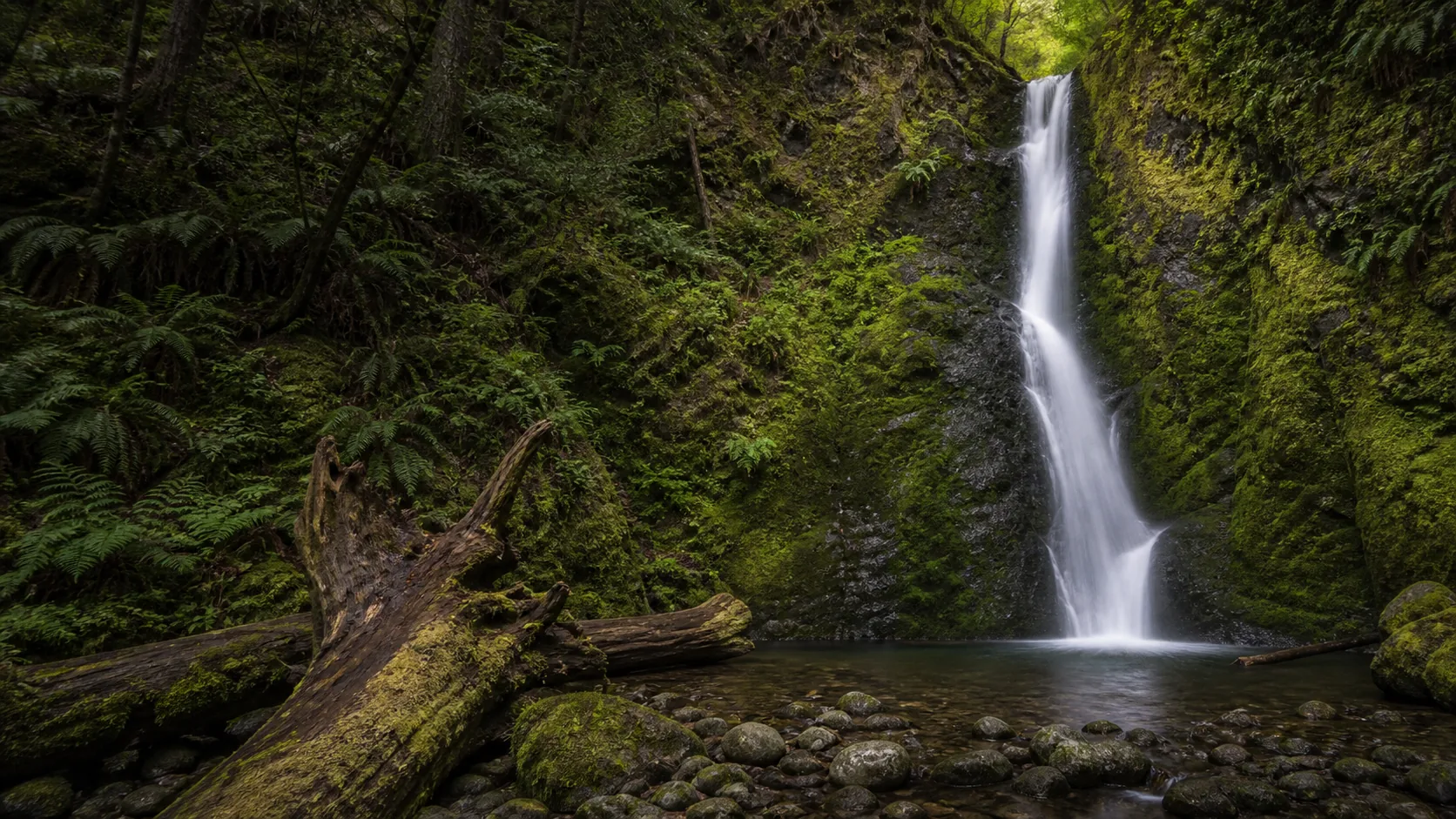
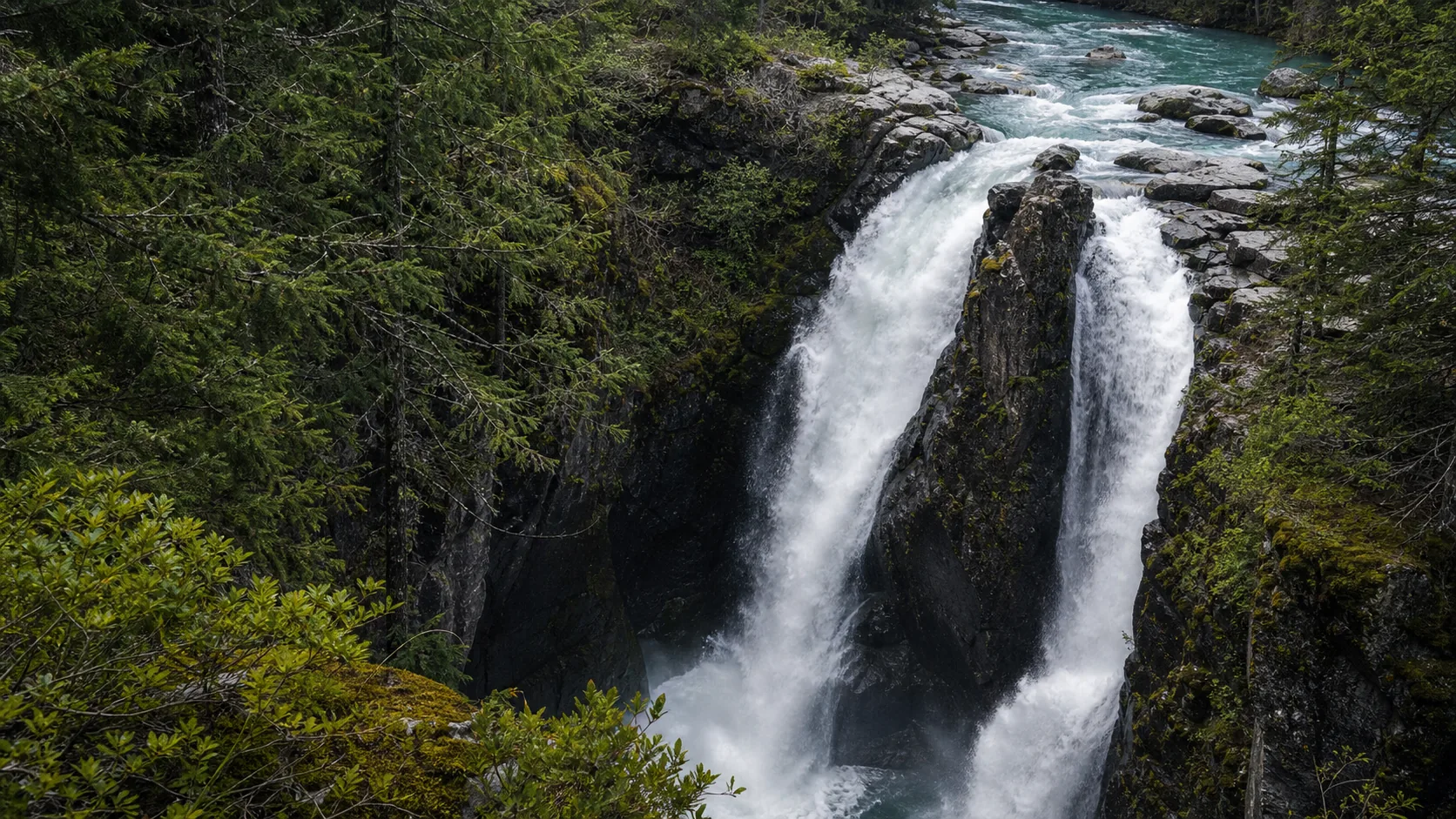
Four photographer-tested viewpoints around Marymere, in the order you walk them: the upper viewpoint, the wooden footbridge across the lip, the lower viewpoint with the full 90-foot horsetail in frame, and the cedar grove on the approach. Use the captions to pick angles before committing to the climb.

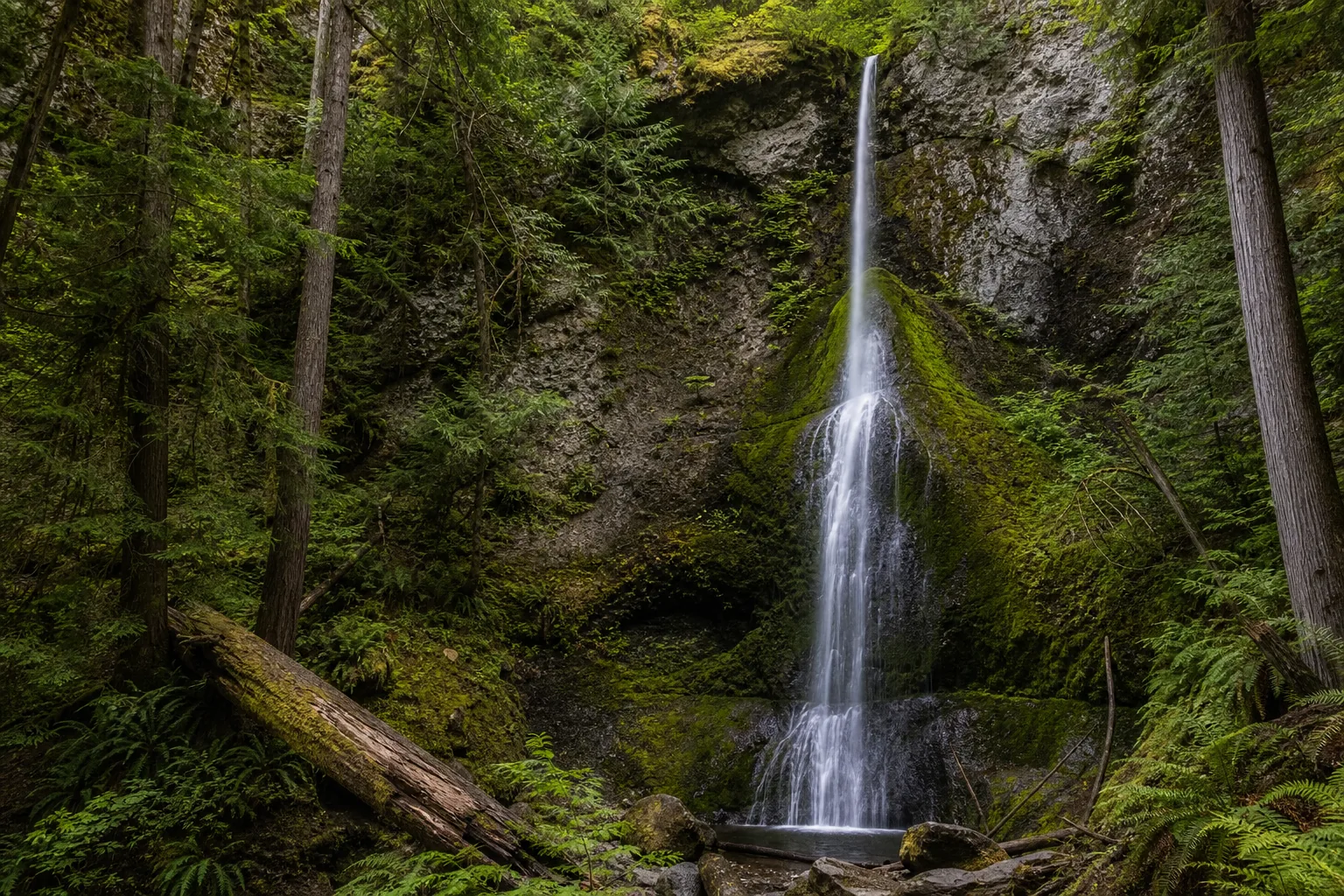
Marymere Falls 90-foot horsetail on Falls Creek in old-growth forest, Olympic National Park
Marymere Falls, hero composition
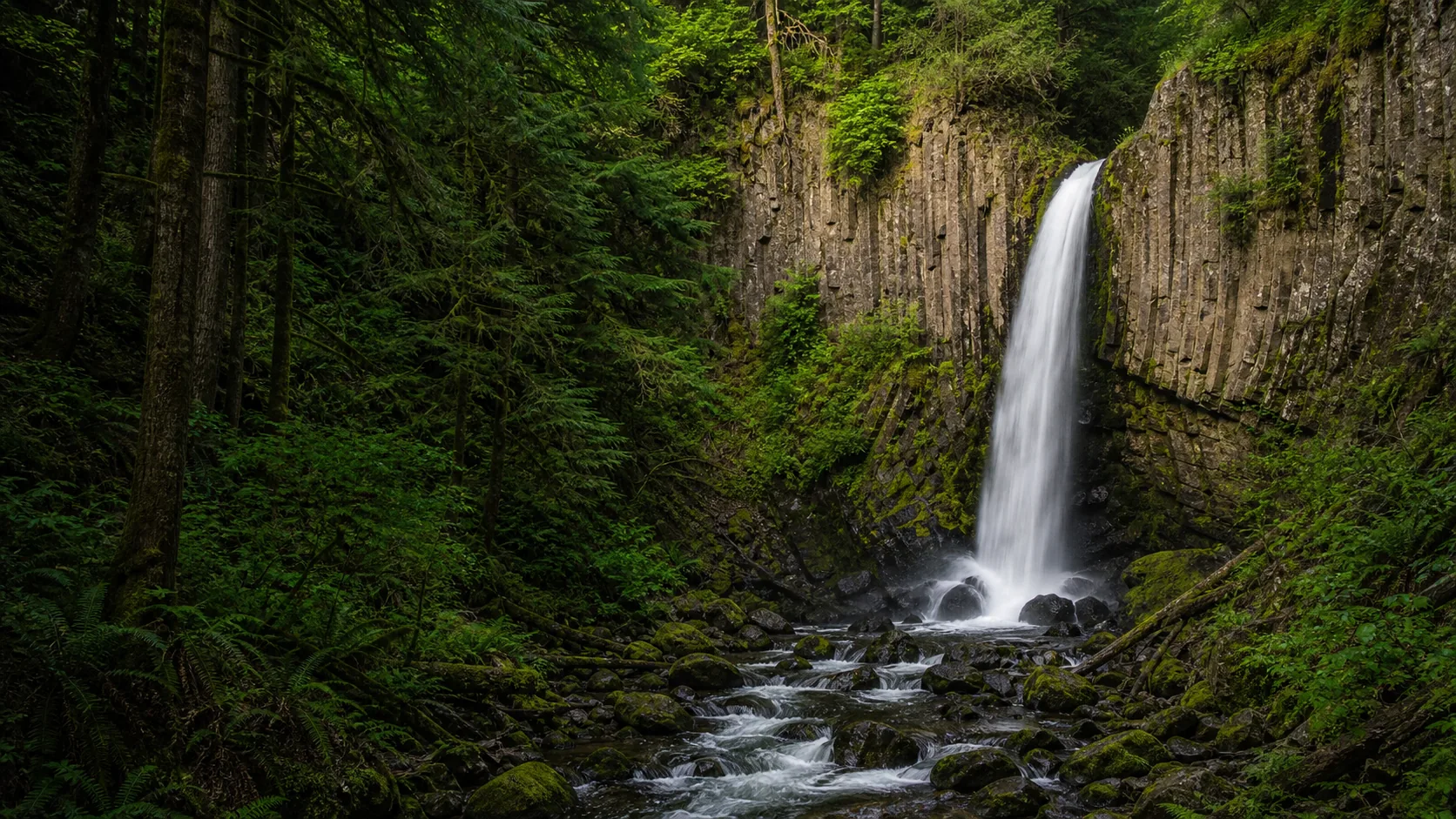
Marymere Falls 90-foot horsetail in old-growth forest ravine on Falls Creek
The 90-foot horsetail seen through the mossy old-growth ravine on Falls Creek
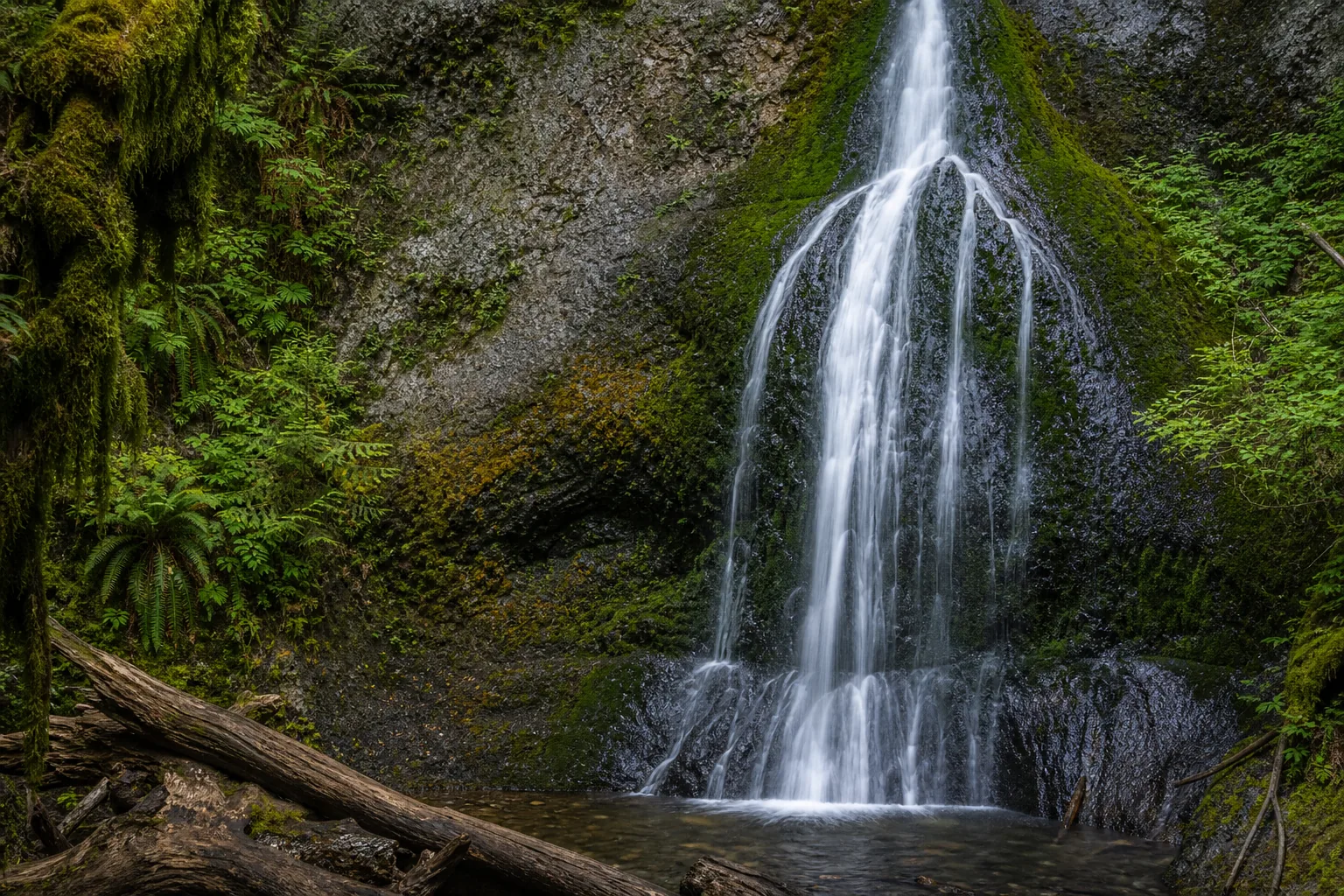
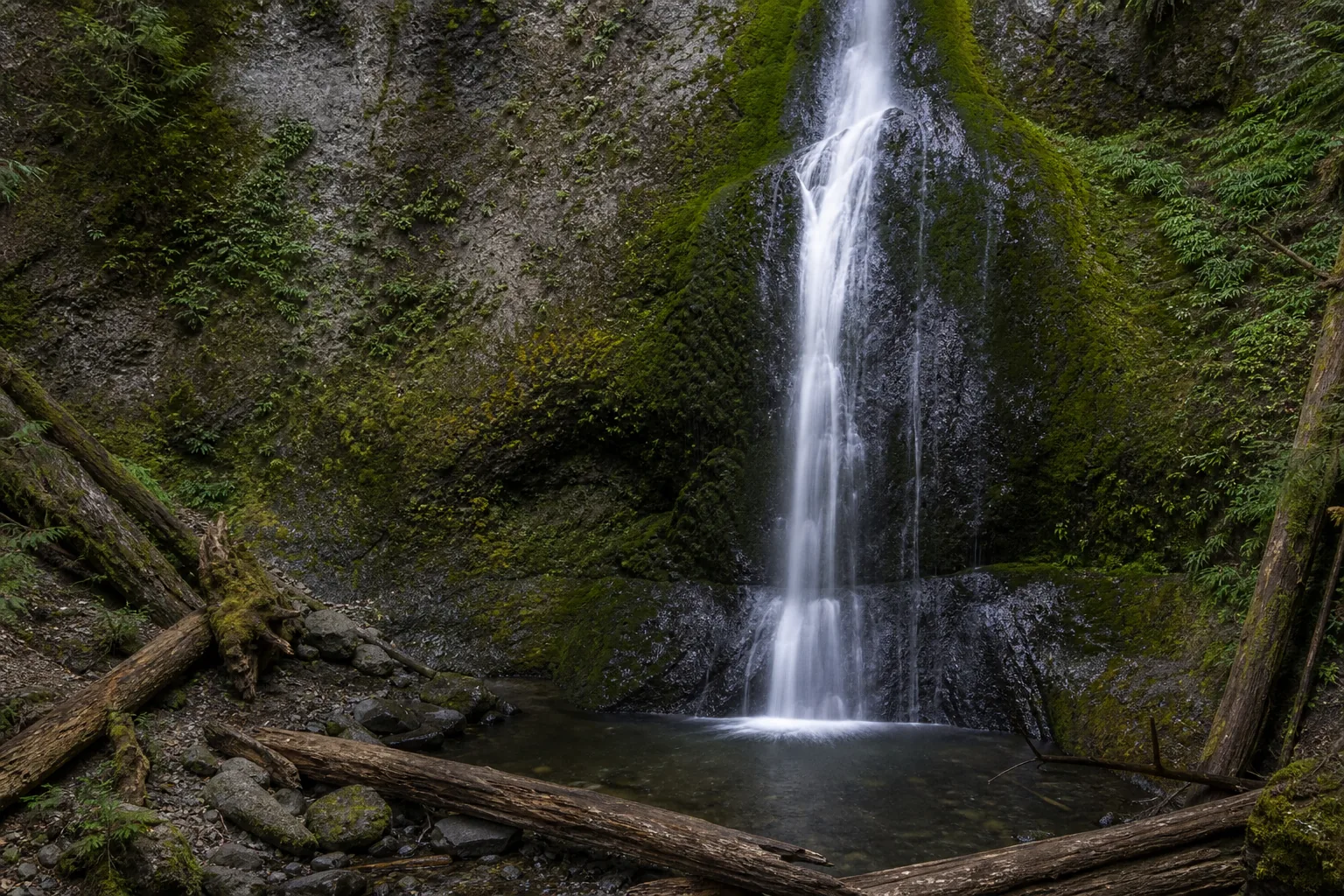
Marymere Falls water fanning across basalt of the Crescent Formation at the base
Water fans across basalt of the Crescent Formation into a shallow plunge pool
Marymere Falls horsetail detail showing water in contact with the rock face
Detail of the horsetail spread; the shape comes from water staying in contact with the rock face
01Is Marymere Falls flowing right now?

Falls Creek is not paired with a real-time USGS discharge gauge, so this guide intentionally hides the flow chip and uses seasonal and weather-based guidance instead.

Falls Creek is not gauged, so use rainfall on the north Olympics and snowpack on Mount Storm King as proxies. The NWS Quillayute forecast and the Olympic NP snow telemetry pages are the closest signals. Peak runoff is April through June; the falls thins from late July through October and rebounds with the first fall rains.

02How long is the walk?

1.8 miles round trip (0.9 mi each way) from the Storm King Ranger Station, with about 400 ft of total elevation gain. The first 0.5 miles is nearly flat through old-growth and crosses two log footbridges; the final 0.4 miles climbs 200 ft on a series of switchbacks to a short upper loop with two railed viewpoints and a footbridge across the lip. Allow 45 to 60 minutes at an easy pace.

03How do you get there?

From Port Angeles, drive 20 miles west on US-101 along the south shore of Lake Crescent to the Storm King Ranger Station turnoff (marked sign on the right). From Seattle, take the Bainbridge Island ferry, then US-101 west through Discovery Bay and Sequim to Port Angeles, then continue west; total drive is about 3 hours not counting the ferry wait. The Lake Crescent Lodge approach is a separate 2.0 mi out-and-back; park at the lodge and walk the shore path to pick up the main trail.

04Is there free parking?

Free parking at the Storm King Ranger Station lot (about 30 spaces) and at a small Marymere/Barnes Creek pull-off off US-101 just east. The lot fills before 10 a.m. on summer weekends and from late June through August. Overflow at Lake Crescent Lodge adds 0.5 miles of walking but is rarely full.

05Does it cost money?

$30 per vehicle for the Olympic National Park entrance pass, valid 7 days at all park entrances. The $80 America the Beautiful annual pass and senior passes are accepted. The trail itself is free once you are in the park; the ranger station, restrooms, and viewpoints have no separate fee.

06Trail variants

Storm King Ranger Station out-and-back 1.8 mi round trip, 45-60 min, 0.9 mi each way, ~400 ft elevation gain.
Lake Crescent Lodge approach 2.0 mi round trip, 60-75 min, adds a short walk along the lakeshore.
Mount Storm King add-on 4.0 mi round trip from same trailhead, 3-4 hr, 1.7 mi climb past the falls junction; steep, ropes near summit.
Lake Crescent base day varies, half-day, pair the falls with kayaking, Lodge lunch, or Spruce Railroad Trail.

Detailed maps and recent reviews: Falls route on AllTrails · Creek route on AllTrails

07Can you swim?

No. Swimming and wading at the base of Marymere Falls are prohibited; the plunge pool is small, cold year-round, and the rocks are slick with algae. For real swimming on a Lake Crescent day, the Lodge beach (0.5 mi) and East Beach (about 4 mi by car) are the legal options.

08Are dogs allowed?

No. Dogs are NOT allowed on the Marymere Falls trail. Olympic National Park bans pets on almost all trails; leashed dogs are permitted only in parking lots, on roads, at Kalaloch and Rialto beaches in limited zones, and at developed campgrounds. Leaving a dog in a car on a summer day is also not safe; use boarding in Port Angeles or Sequim.

09Is it accessible?

Not wheelchair accessible. The trail surface is dirt and gravel with exposed roots, two narrow log footbridges, and a final climb of 200 ft on switchbacks with several wooden stair sections. The lower viewpoint has additional stairs. The Storm King Ranger Station parking area and Lake Crescent Lodge grounds are accessible but the falls themselves require the climb.

Field notes

Marymere at a glance.

90-foot horsetail on Falls Creek, dropping over Crescent Formation basalt and marine sediment, in Olympic National Park (922,651 acres). 1.8-mile out-and-back from the Storm King Ranger Station on Lake Crescent. Sourced from the NPS Olympic Marymere Falls trailhead page and the USGS Geologic Map of Olympic National Park.

Height 90 ft USGS 3DEP
Type Horsetail USGS
County Clallam Clallam County, WA
Managed by National Park Service NPS
Water source Falls Creek (tributary of Barnes Creek) USGS
Elevation 961 ft USGS NED
Park area 922,651 acres NPS
Hours Trail open 24 hours; ranger station hours vary seasonally NPS
When to visit

When to walk it: spring runoff, summer base day, fall color.

Late April through June for the loudest water on Mount Storm King snowmelt. Mid-July through Labor Day for the Lake Crescent base trip (kayak the lake, lunch at the lodge, walk to the falls in the afternoon). Late September through October for fall color in the bigleaf maples without summer crowds. Winter is open and quiet but the boardwalk is slick.

PEAK FLOW

Peak flowApril through June (snowmelt)
Ice / low flowWinter rarely freezes; slick rock and downed timber more common than ice
Most crowdedWeekends and midday
Best photosSunrise or weekdays

Live water context

Discharge data -- Falls Creek is not paired with a real-time USGS discharge gauge, so this guide intentionally hides the flow chip and uses seasonal and weather-based guidance instead.

Why is it called Marymere Falls?

The falls is named for Mary Alice Barnes, sister of the early Olympic Peninsula explorer Charles Adams Barnes, who was part of the 1890 Seattle Press expedition that made the first published traverse of the Olympic interior. Charles Barnes returned to the Lake Crescent area on later trips and the name attached to the falls in the late 1800s, around the same time Barnes Creek itself was named for him. Both names appear on US Geological Survey topographic sheets by the early 20th century and have carried through every federal map since.

What else to do at Olympic National Park

Olympic National Park covers 922,651 acres on the Olympic Peninsula and protects three distinct ecosystems (rainforest, coast, and alpine) within a 90-minute drive of Port Angeles. Marymere Falls is in the Lake Crescent area on the north side of the park; the trail starts at the Storm King Ranger Station, a 1916 log building that doubles as a small information point in summer. The same trailhead serves the 1.7-mile climb up Mount Storm King, the steep add-on that breaks off the Marymere trail just before the falls.

  • Storm King Ranger Station (1916). Log information building on the south shore of Lake Crescent; the starting point for both the Marymere Falls trail and the Mount Storm King climb. Seasonal staffing in summer; restrooms and a small interpretive display.
  • Lake Crescent Lodge (1915). Historic lakeshore lodge a quarter mile from the trailhead with a restaurant, sun porch, kayak rentals, and a public beach. Open seasonally late April through January 1.
  • Falls Creek and Barnes Creek footbridges. Two log footbridges cross the creeks on the way to the falls; both are NPS-maintained and intentionally narrow to keep the trail's rainforest scale.
  • Mount Storm King junction. The unsigned-but-obvious split where the steep Storm King trail breaks off the Marymere approach, about 0.5 miles in. Storm King adds ~2,100 ft of climb in 1.7 miles with hand-placed ropes near the summit.
  • Upper and lower viewpoints. A short loop above the falls reaches two railed viewpoints on either side of Falls Creek, connected by a wooden footbridge directly above the lip.

Why it looks this way

Marymere Falls drops over rocks of the Crescent Formation, the same Eocene-Oligocene sequence (roughly 55 to 30 million years old) of submarine basalts and interbedded marine sedimentary rocks that builds the north flank of the Olympic Peninsula and forms the bedrock of Lake Crescent itself. Falls Creek runs over a thicker, more resistant basalt ledge with thinner sedimentary layers below; the creek wears the softer layers back while the basalt stays put, leaving the water in continuous contact with the rock face as it falls. That contact is the defining feature of a horsetail (water spreads across the rock for most of the drop rather than free-falling clear of it) and it is why Marymere reads as a tall white smear rather than the clean clear-air plunge you get over a hard caprock with a vertical face like Snoqualmie or Multnomah.
Field guide deep dive

What you actually need to plan a Marymere Falls morning.

The 0.9-mile trail, the Crescent Formation geology, the Lake Crescent base day, the Mount Storm King add-on, and the dog rule. Skim the headers, read what you need.

How Marymere Falls formed

Marymere drops over rocks of the Crescent Formation, the Eocene-Oligocene sequence (roughly 55 to 30 million years old) of submarine basalts and interbedded marine sedimentary rocks that makes up the north flank of the Olympic Peninsula. These rocks erupted on the floor of the proto-Pacific as a chain of seamounts, were buried under deep-water sediments, and then got scraped up and stacked onto the edge of North America as the Juan de Fuca plate subducted under the continent. The peninsula's interior is a sediment package that got folded into a doughnut shape; the Crescent Formation forms the harder outer ring, and Lake Crescent itself sits in a glacially carved trough on that ring.

At Marymere, Falls Creek runs over a thicker, more resistant basalt ledge with thinner sedimentary interbeds below it. The creek wears the softer marine sediments back faster than the basalt, but the basalt face itself stays rough and angled rather than vertical. That is the geometry that produces a horsetail: water stays in contact with the rock for almost the full 90-foot drop, spreading across the face rather than free-falling clear of it. The same drainage produces several other horsetails in the Lake Crescent watershed; Marymere is the largest and the most accessible.

The 0.9-mile walk through real old-growth

From the Storm King Ranger Station the trail crosses Barnes Creek on a single-log footbridge with a handrail, then runs nearly level through old-growth Western Hemlock, Western Red Cedar, and Douglas Fir for about half a mile. The biggest cedars on this stretch are 6 to 8 feet across at chest height and 600 to 800 years old; the hemlocks are smaller but taller, with crowns reaching 150 feet. The understory is sword fern, deer fern, salal, and Oregon grape, with the moss thickening on every fallen log as you climb.

About 0.5 miles in, an unsigned-but-obvious junction breaks left and steeply uphill: that is the Mount Storm King trail, a separate 1.7-mile climb covered below. Stay right for the falls. The Marymere trail crosses Falls Creek on a second log footbridge, then climbs 200 feet in switchbacks to a short loop with two railed viewpoints on either side of the creek and a wooden footbridge directly above the lip. The full loop above the falls is the difference between distance_loop and the simple out-and-back; walk it both directions to see the falls head-on from below and then look down the chute from above.

Lake Crescent as the base day

Most Marymere visitors are doing it as part of a Lake Crescent day, not as a standalone destination. The lake is a 624-foot-deep glacially carved trough holding some of the clearest water in Washington (Secchi disk readings regularly exceed 60 feet, which is comparable to Crater Lake). The clarity is a side effect of the watershed having very little nitrogen, which keeps algae growth down; the lake also hosts two endemic trout (the Beardslee and the Crescenti) that evolved in isolation after a landslide closed the natural outlet roughly 7,000 years ago.

The Lake Crescent Lodge (1915) is a quarter mile from the Storm King trailhead and is the practical base. The lodge has a restaurant with a porch overlooking the lake, kayak and rowboat rentals on the swimming beach, and a sun lawn that catches afternoon light. A common itinerary: paddle the lake in the morning when the surface is glass, lunch on the porch, walk the Marymere trail in the afternoon when the ravine is in shade, swim from the lodge beach to cool off before driving on. The lodge is seasonal (typically late April through January 1); if it is closed, the Storm King Ranger Station shoreline is the alternative for the lake portion.

The Mount Storm King add-on

If you want a real Olympic Peninsula day-climb out of the same trailhead, Mount Storm King is the option. The trail breaks off the Marymere approach at the 0.5-mile junction and climbs 2,100 feet in 1.7 miles to a series of summit knobs above Lake Crescent. The grade is consistently steep with no real flat sections, the lower mile is in forest, and the upper half mile gets exposed and narrow. The last 100 feet to the practical summit (the second knob, with the lake view) involves hand-placed ropes that hikers have left over the years; the NPS does not maintain them and does not endorse using them. People with vertigo, kids, or anyone in trail runners on wet rock should stop at the official end of the maintained trail.

Total round trip from the parking lot is about 4 miles with the Marymere falls added at the bottom on the way back. Allow 4 to 5 hours. Best window is mid-July through September when the upper rock is dry; spring snow and fall rain make the upper ropes section genuinely dangerous.

When to go: year-round, but the windows are not equal

Marymere is open year-round and the trail itself is rarely closed. The flow swings are big, though. April through June is peak runoff from Mount Storm King snowmelt; the horsetail runs full-width across the rock and the spray reaches both viewpoints. July through early September is the busiest window because Lake Crescent peaks; the falls thins as the snow runs out but is still a clean white horsetail. Late September through October is the best balance of flow (first fall rains rebuild it), color (bigleaf maples in the ravine turn yellow), and crowds (school in session, lodge winding down).

Winter is open and quiet but the two log footbridges and the wooden stairs on the climb get slick. Hard freezes are rare at this elevation (about 900 ft); the falls does not form an ice column the way higher Cascade falls do. Microspikes are usually unnecessary but a hiking pole is helpful. Check the NPS Olympic alerts page for road closures on US-101 along Lake Crescent, which is the choke point if a winter storm closes the highway.

Why it is a horsetail and not a plunge

Waterfall shape is set by what the bedrock does below the lip. A plunge needs a hard, near-vertical caprock with a softer rock undercutting it; the water free-falls clear of the face. Snoqualmie and Madison Creek Falls (the wheelchair-accessible falls a few miles east of Marymere, also Crescent Formation but on a different exposure) both read closer to plunges. A horsetail needs a steep but not vertical rock face that stays in contact with the water for most of the drop; the water fans, spreads, and aerates as it goes.

Marymere's drop is steep but not overhanging. The basalt face has been weathered into a rough, angled chute rather than a clean wall, and the marine sediment interbeds erode at small steps that keep the water bouncing rather than free-falling. The result is the textured 90-foot smear you see from the lower viewpoint. It is also why the falls reads more dramatically in high water (when the spread is full-width across the face) than in low summer flow (when it breaks into ribbons). For a plunge-style Olympic NP comparison, walk Madison Creek Falls on the same day; the contrast is the easiest geology lesson in the park.

Map and route

Twenty minutes west of Port Angeles on US-101.

From Port Angeles, drive 20 miles west on US-101 along the south shore of Lake Crescent to the Storm King Ranger Station turnoff (marked sign on the right). From Seattle, take the Bainbridge Island ferry, then US-101 west through Discovery Bay and Sequim to Port Angeles, then continue west; total drive is about 3 hours not counting the ferry wait. The Lake Crescent Lodge approach is a separate 2.0 mi out-and-back; park at the lodge and walk the shore path to pick up the main trail.

Photography and weddings

Northeast-facing horsetail, overcast morning, no drones.

Four working positions. The lower viewpoint gives the head-on horsetail with the full 90 feet visible and the plunge pool at the base. The upper viewpoint frames the top of the lip and the falls cascading away below you. The wooden footbridge across the lip is the most-photographed spot but heavily railed; the angle is straight down the chute. The old-growth approach trail itself, especially the cedar grove and the moss-covered nurse logs between the two creek crossings, is the underused frame.

The ravine is in shade most of the day because the surrounding hemlocks are 150 feet tall and the slot the falls drops into faces roughly northeast. Mid-morning on an overcast day is the practical sweet spot for white-water detail. Bright midday sun creates blown-out highlights on the upper falls and deep shadow at the base; avoid it. Late spring through early summer has the most water and the most leaf-out backlight on a sunbreak.

Personal photography is fine from the public viewpoints. Drones are prohibited park-wide in Olympic National Park (NPS Director's Order 56-2014); fines start at $5,000 and confiscation. Commercial filming, large-group shoots, and any setup that blocks the narrow trail require an NPS Commercial Use Authorization or filming permit.

Permits

Weddings and engagements

Olympic National Park allows small wedding ceremonies at specific permitted locations on the Lake Crescent shore. Marymere Falls itself is not a permitted ceremony location because the trail and viewpoints are too narrow; the Lake Crescent Lodge lawn and the Storm King Ranger Station shoreline are the practical alternatives.

Olympic NP wedding permits start at $250 and require an Application for Special Use Permit filed at least 30 days ahead. Group size and amplified sound are restricted; specific allowed locations are listed on the NPS permits page.

Treat the Marymere trail as a portrait-walk option only after the ceremony at the Lake Crescent Lodge or shore, and only with small parties that will not block the trail.

Nearby waterfalls

Other Olympic NP falls and Lake Crescent stops on the same itinerary.

Marymere pairs naturally with the rest of the Lake Crescent area: Madison Creek Falls (the wheelchair-accessible falls a few miles east, also in Olympic NP), Sol Duc Falls (the iconic three-channel drop, 30 minutes south), and the Spruce Railroad Trail on the lake's north shore. Save the Hoh Rain Forest for a separate day.

Related questions

More questions visitors ask before driving to Marymere Falls.

Trail length, entrance fee, dogs (no), accessibility, swimming (no), Storm King add-on, and the best season. The full set is also indexed in the FAQ schema for AI answer engines.

01How tall is Marymere Falls?

Marymere Falls is approximately 90 feet (27 meters) tall. It is a horsetail-type waterfall on Falls Creek, dropping over basalt and marine sedimentary rock of the Eocene-Oligocene Crescent Formation. The water stays in contact with the rock face for nearly the entire drop, which is what defines a horsetail and gives Marymere its textured white-water look rather than a clean clear-air plunge.

02When is the best time to visit Marymere Falls?

Open year-round. The loudest water is April through June on Mount Storm King snowmelt. Mid-July through Labor Day is the busiest window because Lake Crescent peaks. Late September through October balances the first fall rains, bigleaf-maple color in the ravine, and lighter crowds. Winter is quiet and dramatic but the footbridges and wooden stairs get slick; the falls does not freeze into an ice column at this elevation.

03Is Marymere Falls worth visiting?

Yes. It is the best short hike on Lake Crescent and one of the most efficient ways to see real Olympic Peninsula old-growth and a tall horsetail waterfall on the same outing. The 1.8-mile round trip, the two log footbridges over rainforest creeks, and the railed viewpoints above and below the 90-foot drop add up to a complete Pacific Northwest waterfall walk in under an hour. If you are at Lake Crescent for any other reason, the falls is worth the extra hour.

Sources and data

Where the Marymere guide gets its facts.

Trail and access from the NPS Olympic Marymere Falls trailhead page. Geology from the USGS Geologic Map of Olympic National Park and the Washington Geological Survey. Fees and dog rules from the NPS Olympic fee and pet pages. Etymology cross-referenced with Wikipedia and the Olympic National Park library.

NPS: Olympic National Park nps.gov
Access, parking, and permit rules: nps.gov
USGS Geologic Map of Olympic National Park (Tabor & Cady): Crescent Formation basalt and marine sedimentary rocks: Clallam County bedrock pubs.usgs.gov
NOAA / NWS Seattle forecast grid SEW 83,98 (Lake Crescent area) noaa.gov
USGS National Elevation Dataset 3DEP
Wikidata: Q6779596 (Marymere Falls) wikidata.org
Google Maps: embedded map and directions maps.google.com
Google Places: nearby restaurants and hotels places API
NPS Olympic National Park: Marymere Falls Trailhead nps.gov
NPS Olympic National Park: Lake Crescent area and Storm King Ranger Station nps.gov
NPS Olympic National Park: Fees and Passes nps.gov
NPS Olympic National Park: Pets (dog policy) nps.gov
Washington Trails Association: Marymere Falls wta.org
AllTrails: Marymere Falls Trail alltrails.com
Wikipedia: Marymere Falls en.wikipedia.org
Wikimedia Commons: Marymere Falls images commons.wikimedia.org
Fact checks
Height audit: 90-foot height is sourced to the NPS Olympic Marymere Falls trailhead page (October 10, 2024 revision) and matches the Wikipedia and Waterfall Trail entries; no peer-reviewed survey was available to refine the figure further.
Trail length audit: 0.9 miles one way / 1.8 miles round trip from the Storm King Ranger Station is sourced to the NPS trailhead page; the 2.0 mi round trip via Lake Crescent Lodge matches the AllTrails Lake Crescent Lodge variant.
NP entrance fee audit: $30/vehicle 7-day Olympic National Park pass and $80 America the Beautiful annual pass are sourced to the NPS Olympic fees page (current as of May 2026); fees are scheduled to remain at this rate through the 2026 season.
Dog policy audit: confirmed that pets are not allowed on the Marymere Falls trail; the NPS Olympic pets page lists the trail as part of the park-wide trail closure to pets, with limited beach and campground exceptions that do not include this trail.
Corrections: [email protected]