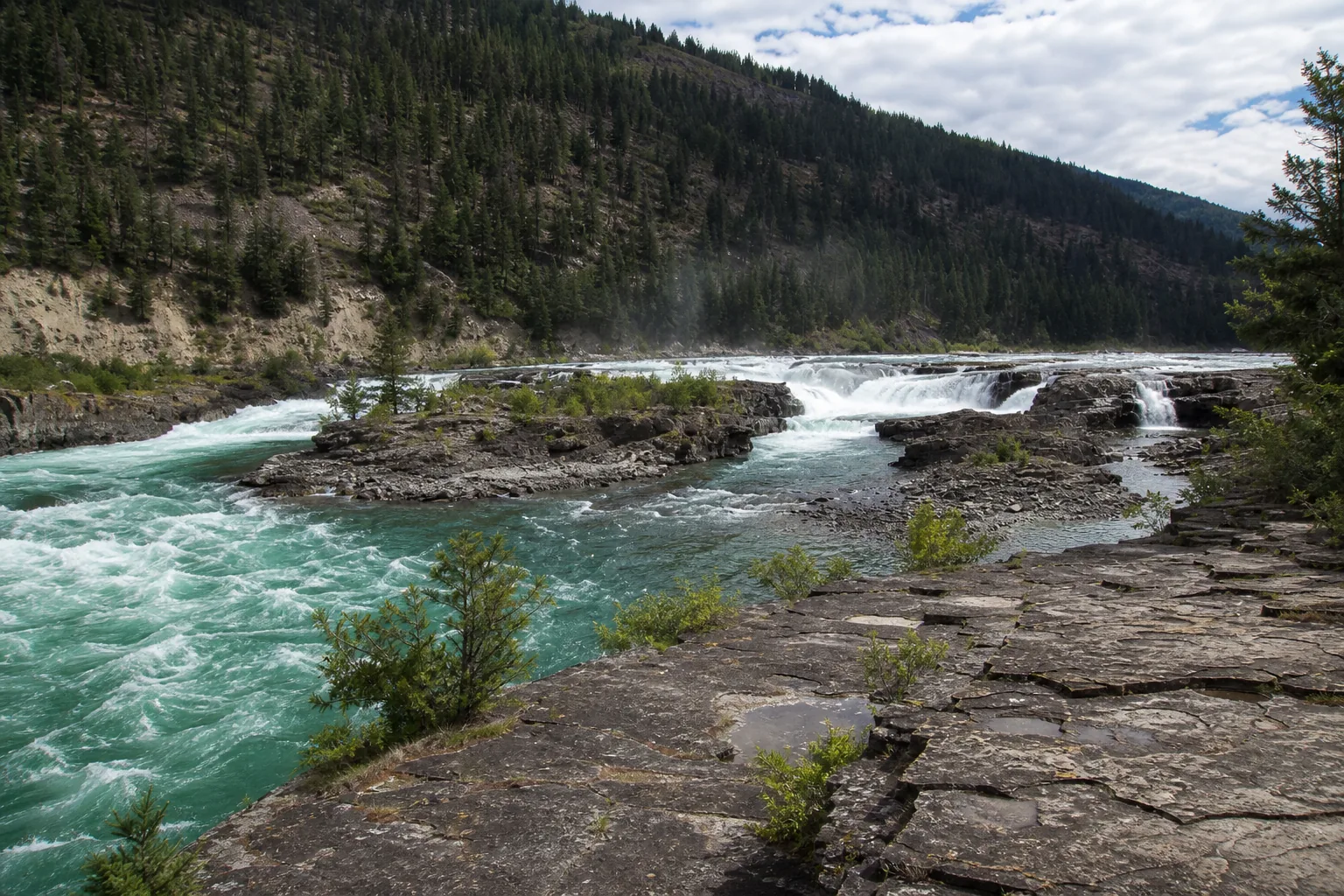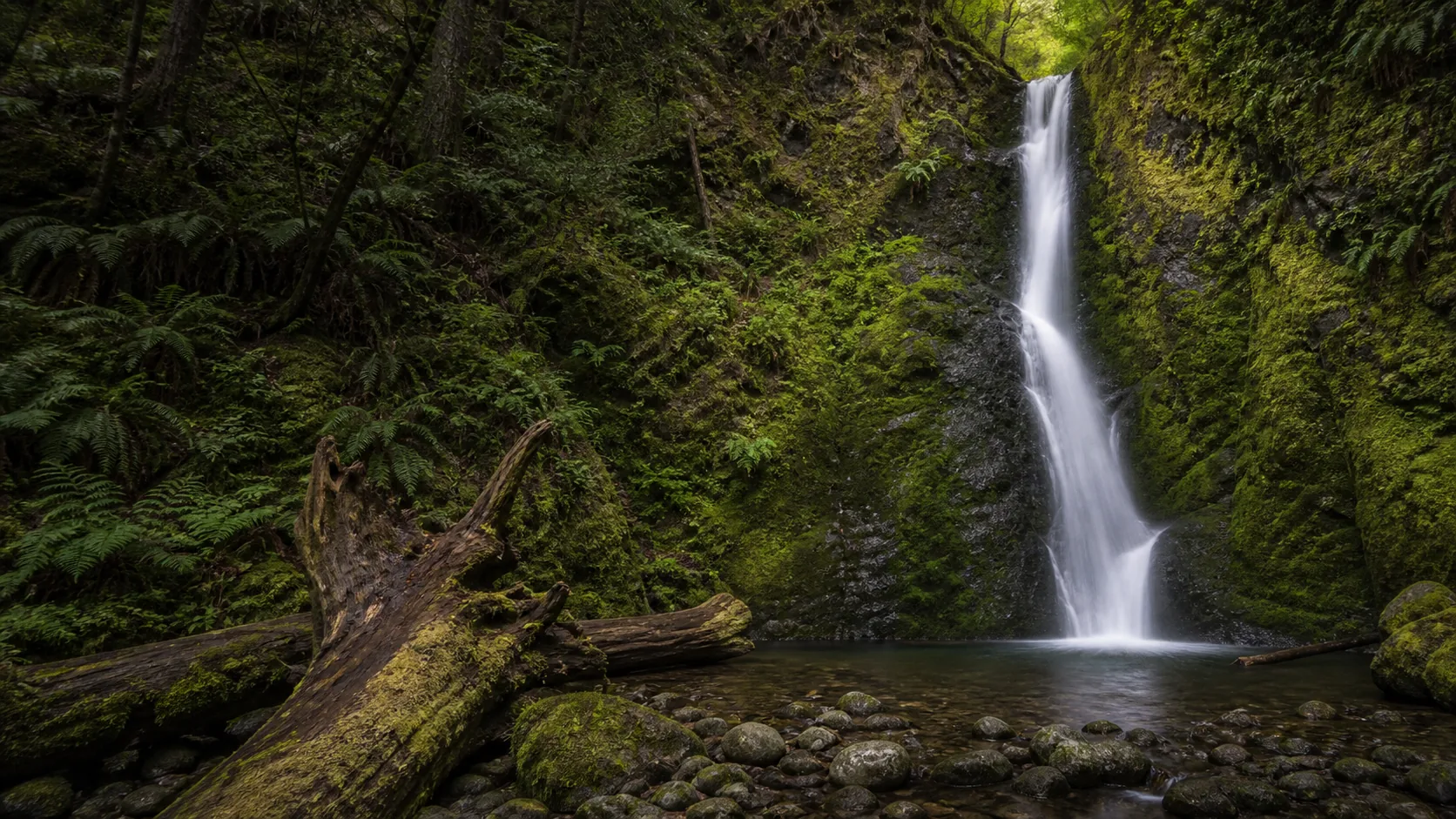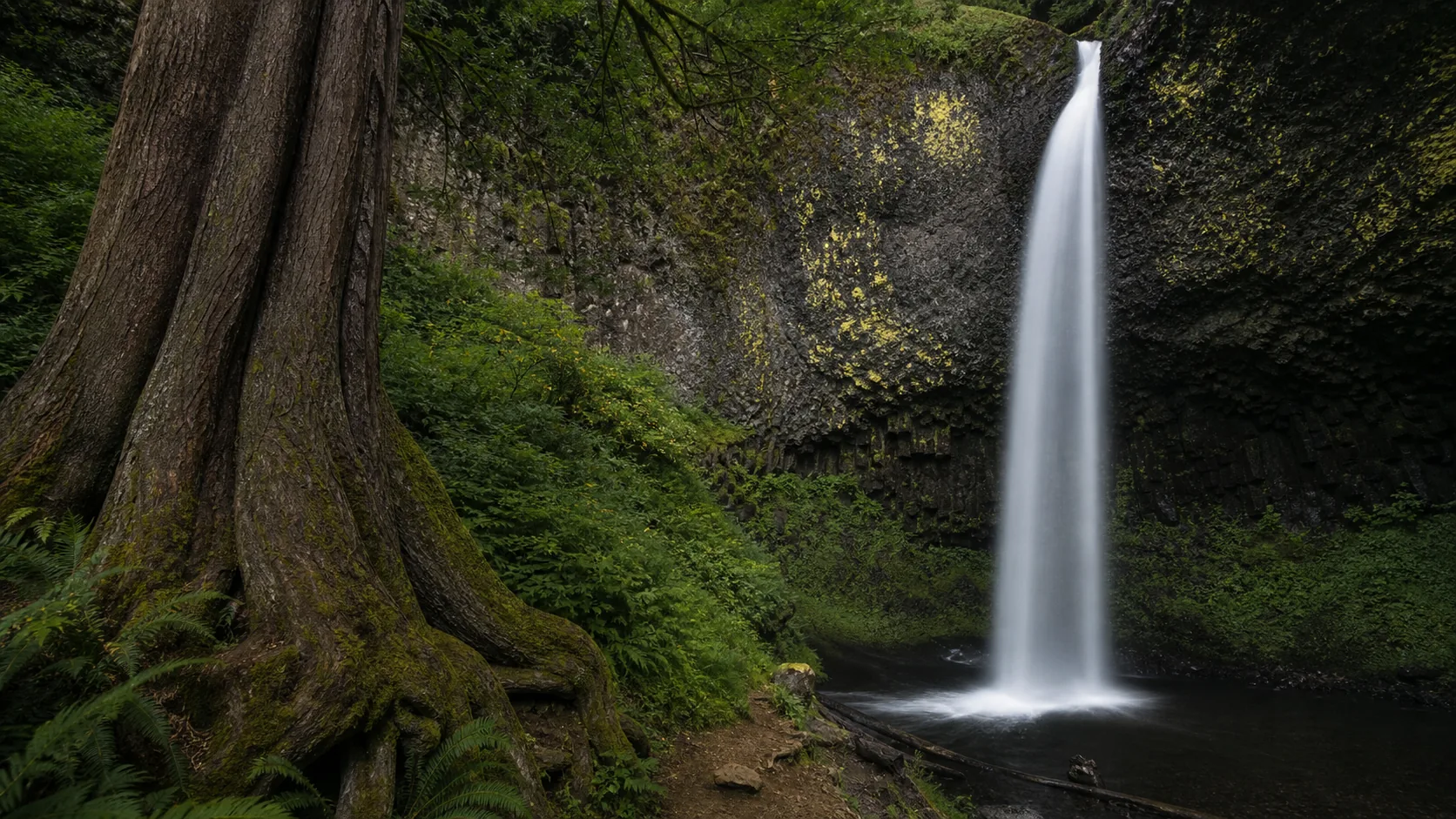
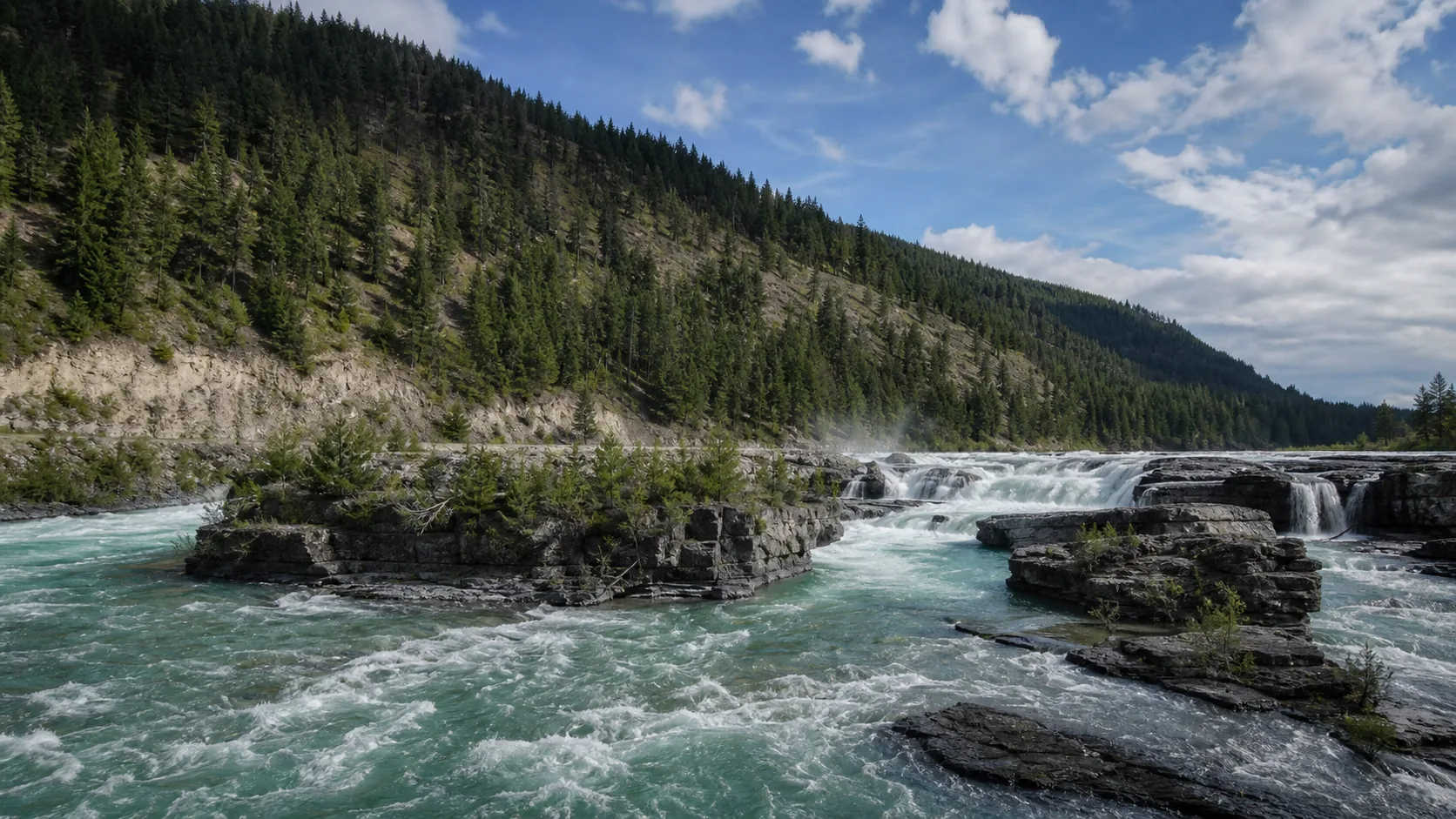
Kootenai Falls cascading across Belt Supergroup quartzite shelves on the Kootenai River in the Cabinet Mountains of northwest Montana
Lincoln County, MT

Kootenai Falls

Kootenai Falls is the largest undammed waterfall in Montana, a 90-foot stair-step cascade where the Kootenai River drops through a tight quartzite gorge between Libby and Troy. The signature experience pairs the main cascade with a swinging suspension footbridge over a side channel just downstream, all reachable on a 0.6 to 1.6 mile out-and-back trail directly off US Route 2.

Last verified May 12, 2026 Visited Desk-verified May 2026 7 sources checked
Trail 0.9 mi 1.6 mi extended
Time 30-90 min Easy to moderate
Best season May through October; dramatic at all flows May through June (snowmelt)
Parking Free USFS day-use lot directly off US-2; fills on summer weekends, arrive before 10 a.m. or after 4 p.m. Kootenai National Forest
Quick answer

Is Kootenai Falls worth visiting?

Yes. May through October is the practical visit window, and the falls is dramatic at every flow because it is a wide cascade rather than a single plunge: spring runoff turns the gorge into a brown roaring chute, late summer drops the level and exposes the polished quartzite shelves underneath. Entry, parking, and the swinging bridge are all free.

  • Largest undammed waterfall in Montana
  • Free USFS day-use lot off US-2
  • 0.6 mi to the falls, 1.6 mi with the swinging bridge
  • Best flows: May through June
  • Sacred to the Ktunaxa (Kootenai) people, treat respectfully
  • Filming location for The River Wild (1994)
Last verified May 12, 2026 Visited Desk-verified May 2026 7 sources checked
Distance 0.9 mi 1.6 mi extended
Round trip 30-90 min Short but rocky; one set of stairs over the BNSF railroad tracks
Difficulty Easy to moderate Short but rocky; one set of stairs over the BNSF railroad tracks
Location Lincoln County, MT Kootenai National Forest
Parking Free USFS day-use lot directly off US-2; fills on summer weekends, arrive before 10 a.m. or after 4 p.m. USFS
Transit No fixed-route transit Drive only; trailhead is on US-2 between Libby and Troy · 0 ft
Drive 11 mi 15 min from downtown
Best season May through October; dramatic at all flows May through June (snowmelt)
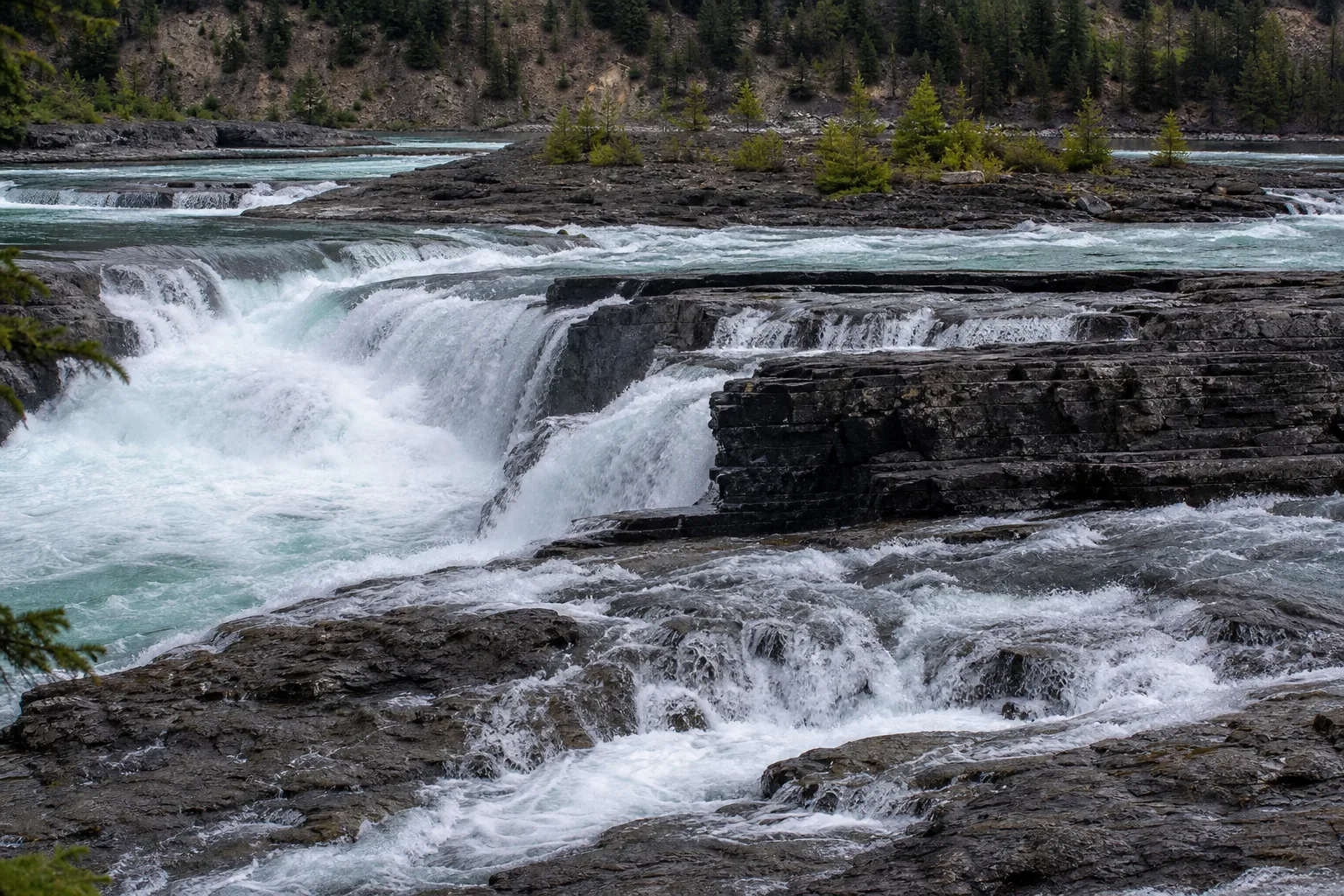
Kootenai Falls main 30-foot drop and the white-water chute below the lip
Photo guide

Three angles of Montana's largest undammed waterfall.

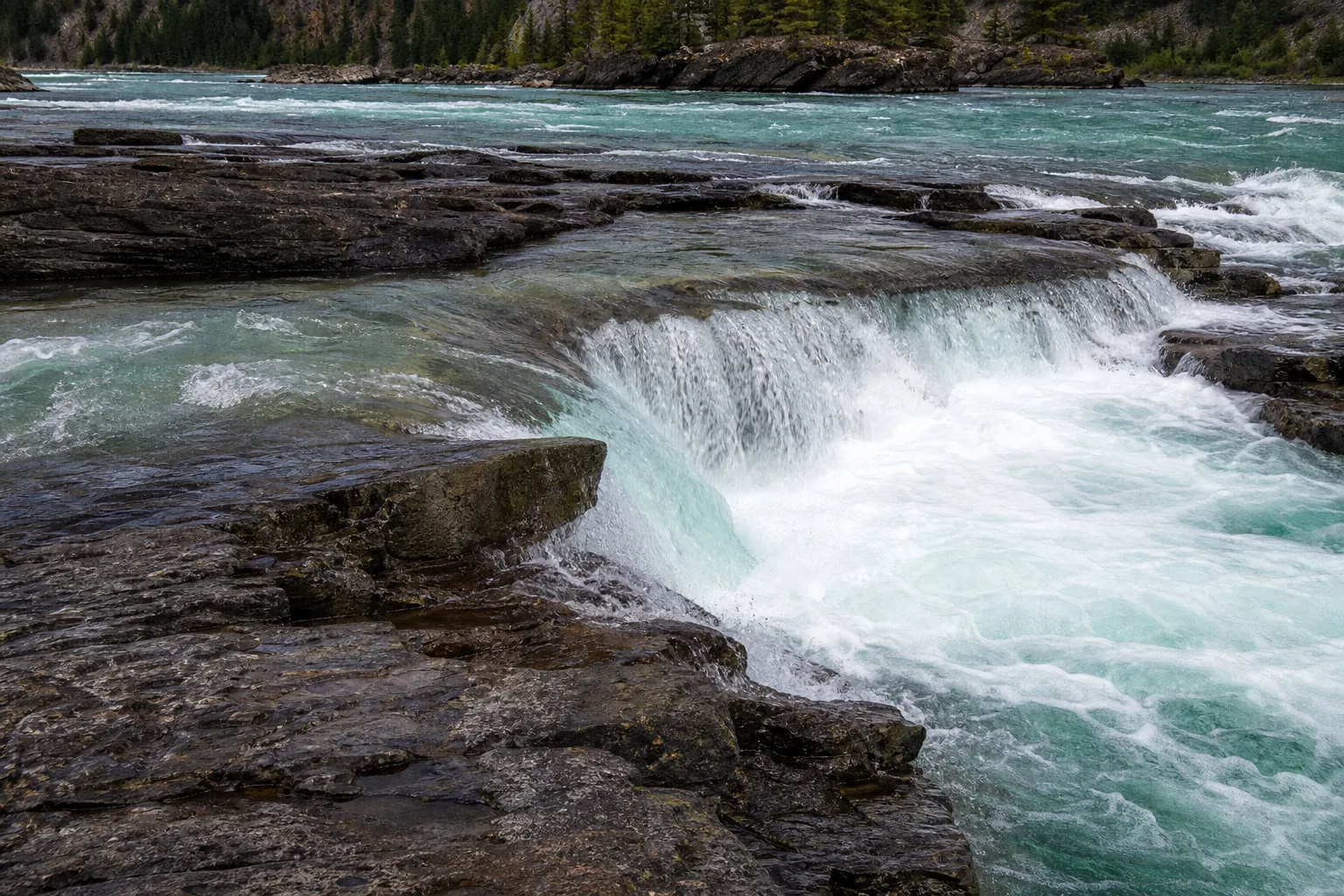
Kootenai Falls is wider than it is tall, so the working frames are the head-on main cascade view, the lower chutes and bowls below the lip, and the polished quartzite shelves where the river bends. The swinging bridge sits over a side channel a short walk downstream from the main viewpoint.

Kootenai Falls cascading across Belt Supergroup quartzite shelves on the Kootenai River in the Cabinet Mountains of northwest Montana
Kootenai Falls, hero composition
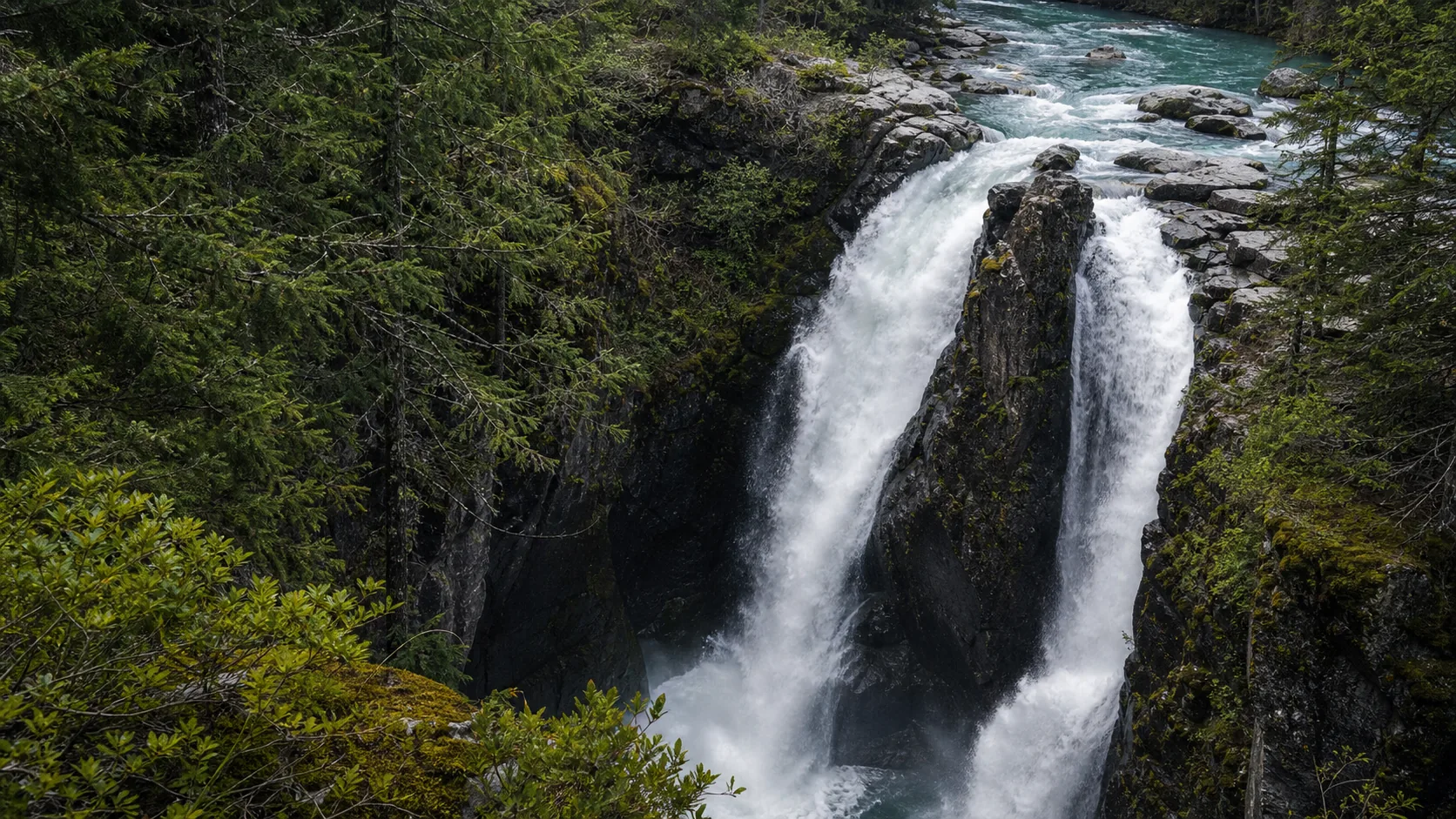
Kootenai Falls wide view of the river gorge cut into Belt Supergroup quartzite
Wide view of the Kootenai River gorge and main cascade
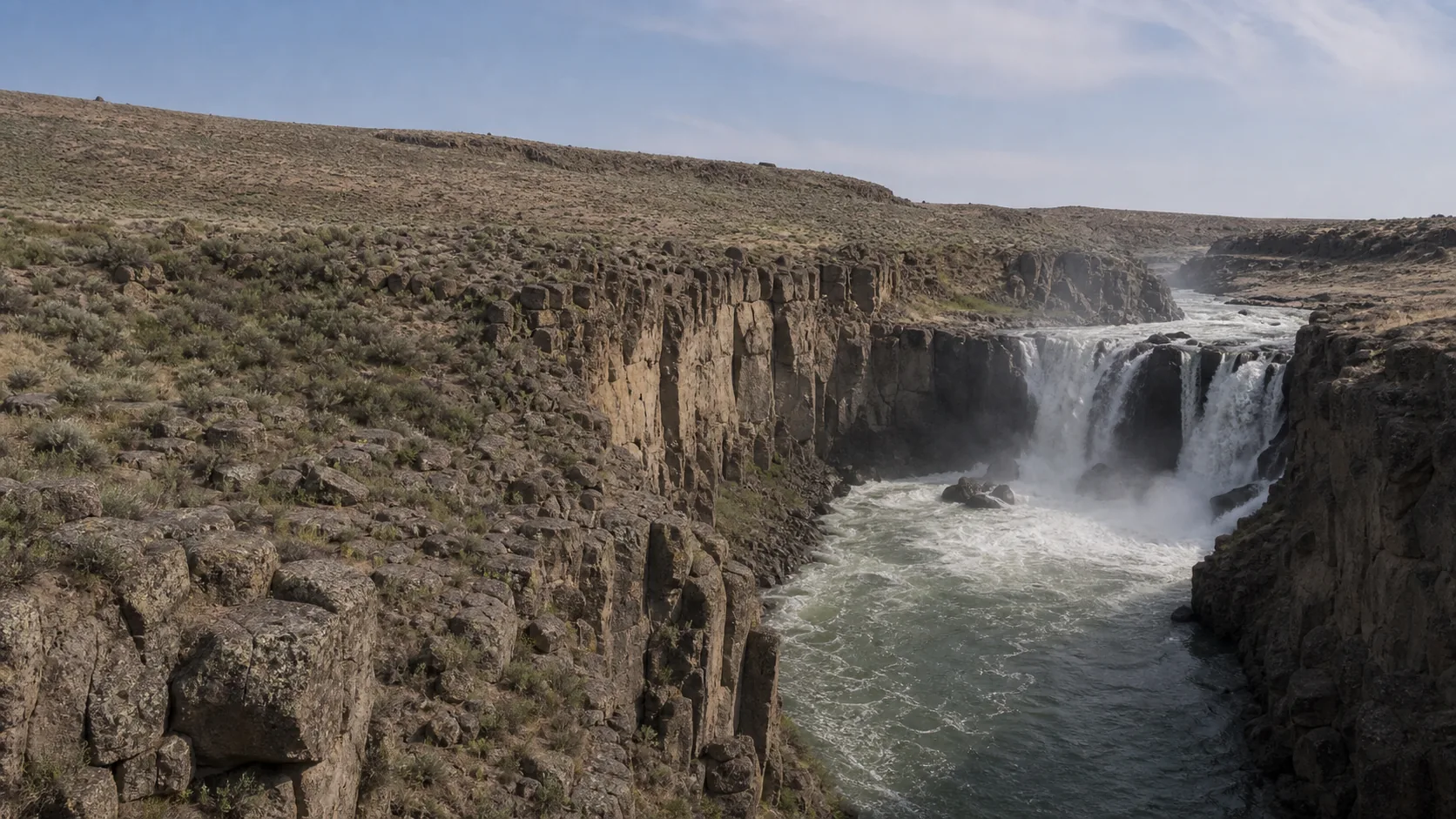
Kootenai Falls main 30-foot cascade and lower chute on the Kootenai River
Main 30-foot drop and the white-water chute below the lip
Kootenai Falls close detail of water sluicing across Belt Supergroup quartzite shelves
Close detail of water polishing the banded quartzite shelves
01Is Kootenai Falls flowing right now?

This guide does not currently pair Kootenai Falls with a verified real-time USGS discharge gauge at the falls.

Kootenai Falls is not paired with a verified live USGS discharge gauge at the falls itself, so this guide does not show a flow chip. As a practical read, the river is loudest and brownest in May and June during Cabinet Mountains snowmelt, then drops and clarifies through summer; the falls is dramatic at every flow because the cascade geometry exposes more quartzite at lower water.

02How long is the walk?

The shortest version is a 0.6 mile round trip from the USFS lot to the main cascade overlook, with a stair overpass over the BNSF mainline and a rocky descent on the far side. Adding the swinging bridge takes it to about 1.6 miles round trip with roughly 200 feet of total elevation change. Most visitors spend 60 to 90 minutes including the bridge.

03How do you get there?

Trailhead is on US Route 2 about 11 miles west of Libby, Montana, and 12 miles east of Troy. The signed USFS day-use lot is on the south side of the highway. From Kalispell (FCA airport) the drive is about 90 miles and 110 minutes west on US-2.

04Is there free parking?

Free USFS day-use lot directly off US-2, with vault toilets and an interpretive panel. The lot is small and fills on summer weekends and during fall color in late September and early October; an overflow lot a short walk east handles the spillover. Arrive before 10 a.m. or after 4 p.m. for the easiest parking in July and August.

05Does it cost money?

Free. No entrance fee, no day-use fee, no parking fee, no Northwest Forest Pass required. Costs would only apply for commercial photography or special-use permits.

06Trail variants

Falls overlook only 0.6 mi round trip, 30 min, shortest route to the main cascade view.
Falls plus swinging bridge 1.6 mi round trip, 60 to 90 min, the classic visit; includes the suspension bridge over the side channel.
China Rapids viewpoint extension add 0.4 mi each way, 30 min extra, downstream rapids below the main falls.
Photo-first visit 0.6 mi, 30 to 45 min, morning or overcast light is cleanest.

Detailed maps and recent reviews: Falls route on AllTrails · Creek route on AllTrails

07Can you swim?

No. Swimming and wading in the Kootenai River at the falls are strongly discouraged and several drownings have occurred at and below the cascades. The river is cold, fast, and structured into hydraulics that hold debris. Stay off the wet quartzite shelves above the lip.

08Are dogs allowed?

Yes, on leash. The trail, the railroad overpass, and the swinging bridge are all dog-allowed, but the bridge deck moves under foot traffic and the cliff edges above the cascade are unfenced in places; keep dogs on a short leash the entire visit.

09Is it accessible?

Not accessible. The route includes a steep metal stair overpass above the BNSF mainline and a rocky, uneven descent to the falls. There is no wheelchair-accessible viewpoint of the main cascade.

Field notes

Kootenai Falls at a glance.

90 feet of total drop in less than a mile with a 30-foot main cascade, the largest undammed waterfall in Montana, set in the 2.2 million-acre Kootenai National Forest off US Route 2 between Libby and Troy. Sourced from the USFS Kootenai NF recreation page and Visit Montana.

Height 90 ft USGS 3DEP
Type Cascade (series of drops) USGS
Rock Belt Supergroup quartzite and argillite Montana Bureau of Mines and Geology: Belt Supergroup overview
County Lincoln Lincoln County, MT
Managed by USDA Forest Service, Kootenai National Forest USFS
Water source Kootenai River USGS
Elevation 2011 ft USGS NED
Park area 2,200,000 acres USFS
Hours Day-use area, sunrise to sunset recommended; access road open year-round USFS
When to visit

May through October, with a peak in May and June.

Spring snowmelt out of the Cabinet Mountains pushes the river loudest from mid-May through late June; the falls is still impressive through summer and into the fall larch color in late September and early October. The trail is unmaintained in winter and the railroad-overpass stairs ice over.

PEAK FLOW

Peak flowMay through June (snowmelt)
Ice / low flowDecember through February
Most crowdedWeekends and midday
Best photosSunrise or weekdays

Live water context

Discharge data -- This guide does not currently pair Kootenai Falls with a verified real-time USGS discharge gauge at the falls.

Why is it called Kootenai Falls?

The name Kootenai comes from the Ktunaxa Nation, also spelled Kutenai or Kootenay in Canada. The Ktunaxa are the Indigenous people whose traditional territory spans what is now northwest Montana, the Idaho Panhandle, and southeastern British Columbia. The falls itself is a sacred site to the Ktunaxa: in Ktunaxa cosmology this stretch of river is a place where the spirit world meets the physical world. Visitors are asked to be respectful and to stay on marked trails rather than scrambling onto the cascades.

What else to do at Kootenai National Forest

Kootenai Falls is the headline of a small USFS day-use area inside the 2.2 million-acre Kootenai National Forest, with the trailhead directly off US Route 2 about 11 miles west of Libby and 12 miles east of Troy. The visit splits into two destinations from the same parking lot: the main cascade viewpoints reached by a stair-and-trail crossing over the BNSF railroad tracks, and the swinging suspension bridge over a side channel a short walk downstream. China Rapids is the rougher whitewater stretch below the falls, visible from the trail before the bridge.

  • Main cascade viewpoint. A railed overlook above the 30-foot main drop, reached by a 0.6 mi round trip from the lot. This is the iconic photo.
  • Kootenai Falls Swinging Bridge. A pedestrian suspension footbridge over a side channel of the Kootenai River, downstream from the falls. The deck moves under foot traffic; one of the few historic suspension footbridges still open to the public in Montana.
  • BNSF railroad overpass. The trail crosses an active mainline railroad on a metal-stair pedestrian overpass. Common bottleneck on busy weekends.
  • China Rapids. The continuous whitewater chute below the main falls, visible from the trail between the cascade overlook and the swinging bridge.
  • USFS day-use lot. Free parking directly off US-2 with vault toilets and an interpretive panel; overflow lot a short walk east.

Why it looks this way

Kootenai Falls drops over the Belt Supergroup, a 1.4 to 1.5 billion-year-old stack of metasedimentary rock that makes up most of the Cabinet Mountains and the surrounding northwest Montana ranges. The local section here is hard quartzite interbedded with thinner argillite layers, and the riverbed steps down across the more resistant quartzite beds in a series of ledges rather than dropping over a single lip. That is why the falls reads as a wide cascade with multiple chutes and pour-overs instead of a single plunge: the river is unzipping a tilted layer cake of rock about as old as continental crust gets in this part of the world.
Field guide deep dive

What you cannot tell from a USFS listing or a Tripadvisor review.

Belt Supergroup geology, the swinging bridge, the Ktunaxa sacred-site context, the River Wild filming, and what 0.6 to 1.6 miles actually feels like on this trail. Skim the headers, read what you need.

How Kootenai Falls formed

Kootenai Falls is a cascade rather than a plunge, and the reason is the rock. The Kootenai River runs across the Belt Supergroup, a 1.4 to 1.5 billion-year-old stack of metasedimentary rock that makes up most of the Cabinet Mountains and that, geologically, is roughly the same age as the oldest sedimentary rocks anywhere on the continent. In this section the river is cutting across hard quartzite interbedded with thinner, softer argillite layers, all of it tilted slightly toward the north.

That layered, tilted geometry is what produces the staircase cascade rather than a single waterfall. The river drops onto each successive quartzite bed, slides across it, and then drops again where the next softer argillite layer has worn back. The total fall is roughly 90 feet over less than a mile of river, with the main visible drop at the cascade overlook running about 30 feet. The bowl-shaped pools you can see at low summer water are spots where the river has scoured down through a soft argillite into the next quartzite shelf and stalled.

The other piece of the puzzle is glaciation. The Kootenai River trench was deepened by the Cordilleran Ice Sheet during the last glacial maximum, which scoured out the broader valley and left the river to find a new path across the resistant Belt rocks. That mismatch, an older deep valley and a younger river working across hard bedrock, is why the falls is set in a tight inner gorge rather than spread across the wider valley floor.

The swinging suspension bridge

The Kootenai Falls Swinging Bridge is a pedestrian suspension footbridge across a side channel of the Kootenai River downstream from the main cascade. It is one of the few historic suspension footbridges in Montana still open to the public, and for most visitors it is the reason to do the full 1.6 mile round trip rather than turning back at the cascade overlook.

The current bridge is a replacement of an older suspension footbridge that was built in 1980 by Lincoln County and the Kootenai Tribe of Idaho after the original was damaged. The deck is narrow, the cables are anchored into the gorge walls, and the entire structure moves visibly under foot traffic. The published capacity is small, on the order of a handful of people at a time, and busy summer weekends produce a slow-moving queue at both ends. Children love it, adults with vertigo do not, and dogs handle it about as well as the dog handles unstable footing in general.

The view from the middle of the bridge is the under-photographed frame: looking upstream you can read the lower chutes of China Rapids and the gorge wall the cascade cuts through, looking downstream you get the wider river bend where the Kootenai opens back up. The bridge sits roughly 100 feet above the water, depending on flow.

The River Wild (1994) filmed here

The River Wild is the 1994 Curtis Hanson thriller starring Meryl Streep and Kevin Bacon, about a family rafting trip that turns into a hostage situation. The film's whitewater sequences were shot across several rivers in Montana and Oregon, and the Kootenai River below Kootenai Falls is one of the locations. The most visible footage from this stretch is the heavy whitewater of China Rapids, the chute immediately below the main falls.

The production used the Kootenai because the cascade and the rapid below it give a single continuous run of dramatic whitewater set in a tight rock gorge, which is photogenic in a way that bigger but more open western rivers are not. Streep famously did much of her own rowing in the film, and Hanson's crew shot from both the gorge walls and from rafts in the rapid itself. The Forest Service permit for the production is part of why Kootenai Falls shows up in older travel writing as a film-location stop rather than only a regional waterfall.

The actual Class IV+ rapid you can see from the trail is not run commercially today; the cascade and the rapid below it are considered too dangerous for outfitter trips, and the legal river access for kayakers begins well downstream. The viewing experience from the trail is the watch-the-rapid-from-above frame, which is roughly the same angle the film used for its overhead shots.

Ktunaxa cultural significance

The name Kootenai comes from the Ktunaxa Nation, spelled Kutenai in some older US sources and Kootenay in Canada. The Ktunaxa are the Indigenous people whose traditional territory spans what is now northwest Montana, the Idaho Panhandle, and southeastern British Columbia, and they have lived along the Kootenai River for thousands of years before the US-Canada border was drawn through it.

The falls itself is a sacred site. In Ktunaxa cosmology this stretch of river is described as a place where the spirit world meets the physical world, and traditional practice involves prayer, offerings, and times of quiet near the cascade. The Kootenai Tribe of Idaho (the US-side Ktunaxa community) and the Kootenai Tribe of Montana both retain cultural ties to the falls, and the tribes were involved in the rebuilding of the swinging footbridge in 1980.

For visitors, the practical translation is simple. Stay on marked trails rather than scrambling onto the cascades for photos. Keep your group quiet at the cascade overlook itself if a Ktunaxa visitor is there for ceremony. Do not leave offerings, prayer ties, or any objects on the rocks; well-meaning visitor objects accumulate quickly and are not the same as cultural items left by the tribe. The Ktunaxa Nation Council and the Kootenai Tribe of Idaho publish their own guidance for non-tribal visitors to the falls; check those pages before a first visit.

What 0.6 to 1.6 miles actually feels like on this trail

From the USFS day-use lot off US-2 the trail begins at a metal pedestrian stair overpass over the BNSF mainline railroad. The overpass is the first bottleneck: it is a steep set of stairs with railings, the stairs ring when a train goes under (and trains do go under, often), and the structure is the only piece of the route that is not suitable for strollers or anyone uncomfortable with stairs.

Past the overpass the trail descends on a rocky, uneven path through pines and cottonwoods toward the river. The cascade overlook is about 0.3 miles in, with a railed viewpoint above the main 30-foot drop. The trail then continues downstream along the gorge, with China Rapids visible below, and reaches the upper end of the swinging suspension bridge at about 0.8 miles. Crossing the bridge and turning back at the far side puts the round trip near 1.6 miles. Most visitors spend 60 to 90 minutes.

The trail is dog-allowed on leash and is busy enough on July and August weekends to produce slow foot traffic on the overpass and bridge. The most pleasant visit is a weekday morning in late June, when the snowmelt is still loud and the lot is not yet full. The fall color window in late September and early October is the under-rated second-best visit; western larch turns gold along the gorge walls and the river is quieter and clearer.

Photography practical: a north-facing gorge

Three things about the geometry change what works at Kootenai Falls. First, the cascade runs east to west across the river, so the head-on view from the overlook is a wide horizontal frame, not the vertical-format frame that most plunge waterfalls produce. Plan compositions in landscape orientation. Second, the gorge faces roughly north, so direct sun reaches the main cascade only briefly in the middle of summer days and never in winter; soft overcast is the cleanest light. Third, long-exposure smoothing flattens the chutes into a featureless white sheet and loses the texture of the quartzite. A 1/60 to 1/250 second shutter keeps the water structure readable while still showing motion.

The swinging bridge is the second key frame, ideally shot from one anchor end with the cables leading the eye across the channel. Watch for foot traffic on the deck and wait for a clear span; the bridge is busy enough on summer weekends that a clean shot requires patience or an early start.

Map and route

Eleven miles west of Libby on US Route 2.

Trailhead is on US Route 2 about 11 miles west of Libby, Montana, and 12 miles east of Troy. The signed USFS day-use lot is on the south side of the highway. From Kalispell (FCA airport) the drive is about 90 miles and 110 minutes west on US-2.

Photography and weddings

Good light, safer footing, fewer surprises.

Kootenai Falls is a wide, horizontally-spread cascade in a deep north-facing gorge, which changes what works photographically. The two essential frames are the main cascade overlook (a head-on view of the 30-foot drop and the quartzite shelves) and the swinging bridge, ideally shot from the near bank with the cables leading the eye across to the far side. Long exposures from the cascade overlook flatten the chutes into a milky sheet and lose the texture of the rock; a 1/60 to 1/250 second shutter keeps the water structure readable.

The gorge faces roughly north, so direct sun hits the main cascade only in the middle of the day in summer and never reaches it for much of the year. Overcast or light-overcast days are the best conditions because the river and the rock both stay in even light. Early morning and late afternoon throw the gorge into deep shade, which lifts contrast on the white water but loses detail in the canyon walls.

Personal photography from the marked viewpoints does not require a permit. Drone flights are restricted in the immediate area; check the current USFS Kootenai NF rules and FAA airspace, and avoid flying over the swinging bridge or near the BNSF mainline. Commercial photography and any staged setup that blocks the trail or the bridge requires Forest Service approval.

Permits

Weddings and engagements

The swinging bridge has become an informal small-ceremony location, particularly for elopements. The Forest Service treats this as a busy public site and does not reserve the bridge for private use.

Special-use permits for commercial photography, weddings, or any private event are issued by the Kootenai National Forest and require advance application. The bridge cannot be closed for a private ceremony.

Keep the group small, plan around the busiest summer hours (10 a.m. to 4 p.m. on weekends), and respect the Ktunaxa sacred-site context of the falls itself; the swinging bridge is the appropriate setup location, not the cascades.

Related questions

More questions visitors ask before driving to Kootenai Falls.

Bridge, height, dogs, fees, hike length, and the actual answer to the worth-visiting question. The full set is also indexed in the FAQ schema for AI answer engines.

01Where is Kootenai Falls?

Kootenai Falls is on the Kootenai River in Lincoln County, Montana, directly off US Route 2 about 11 miles west of Libby and 12 miles east of Troy. The signed USFS day-use lot is on the south side of the highway.

02Is Kootenai Falls free?

Yes. Entry, parking, and the swinging bridge are all free. There is no day-use fee, no Northwest Forest Pass requirement, and no charge to cross the bridge. The only fees apply to commercial photography and special-use permits issued by the USFS Kootenai National Forest.

03How do you get to the Kootenai Falls swinging bridge?

From the USFS day-use lot off US-2, cross the pedestrian stair overpass above the BNSF railroad tracks, follow the trail past the main cascade overlook, and continue downstream along the gorge. The swinging suspension bridge is about 0.8 miles in, over a side channel of the Kootenai River.

04Was The River Wild filmed at Kootenai Falls?

Yes. The 1994 Curtis Hanson thriller The River Wild, with Meryl Streep and Kevin Bacon, used the Kootenai River and the China Rapids whitewater below Kootenai Falls as one of its filming locations. The cascade and the rapid below it are not run commercially because they are considered too dangerous; legal kayak access begins well downstream.

05How tall is Kootenai Falls?

Kootenai Falls drops a total of about 90 feet over less than a mile of river, with the main visible cascade at the overlook running roughly 30 feet. It is a wide stair-step cascade rather than a single plunge, and it is the largest undammed waterfall in Montana.

06Is Kootenai Falls worth visiting?

Yes. It is the largest undammed waterfall in Montana, the only one with a public swinging suspension bridge over the same stretch of river, and one of the few accessible waterfall stops directly off a US highway in the Northwest. It is also a sacred site to the Ktunaxa (Kootenai) people; visit respectfully and stay on marked trails.

Sources and data

Where the Kootenai Falls guide gets its facts.

Access and history from the USFS Kootenai National Forest recreation page. Geology from the Montana Bureau of Mines and Geology summary of the Belt Supergroup. Cultural context cross-referenced with the Ktunaxa Nation Council. Filming details cross-referenced with the AFI Catalog for The River Wild (1994).

USFS: Kootenai National Forest fs.usda.gov
Access, parking, and permit rules: fs.usda.gov
Montana Bureau of Mines and Geology: Belt Supergroup overview: Lincoln County bedrock mbmg.mtech.edu
NOAA / NWS Missoula forecast grid MSO 60,214 noaa.gov
USGS National Elevation Dataset 3DEP
Google Maps: embedded map and directions maps.google.com
Google Places: nearby restaurants and hotels places API
USFS Kootenai National Forest: Kootenai Falls and Swinging Bridge fs.usda.gov
Visit Montana: Kootenai Falls listing visitmt.com
AllTrails: Kootenai Falls Trail (current reviews and conditions) alltrails.com
Wikipedia: Kootenai Falls en.wikipedia.org
Wikidata: Kootenai Falls wikidata.org
Ktunaxa Nation Council: about the Ktunaxa (Kootenai) people ktunaxa.org
Wikimedia Commons: Kootenai Falls image category commons.wikimedia.org
NOAA / NWS forecast grid MSO 60,214 weather.gov
Fact checks
Height audit: the 90-foot total drop and 30-foot main cascade come directly from the USFS Kootenai National Forest recreation page (Kootenai Falls and Swinging Bridge), cross-checked against the Wikipedia article on Kootenai Falls.
Swinging bridge audit: the rebuilt-in-1980 date and the involvement of Lincoln County and the Kootenai Tribe of Idaho come from the USFS Kootenai NF page and Visit Montana; the bridge is described as one of the few historic suspension footbridges in Montana still open to the public.
River Wild audit: Kootenai Falls and the China Rapids stretch below it are listed as a 1994 The River Wild filming location in the AFI Catalog entry and contemporary USFS film-permit reporting; the film was directed by Curtis Hanson and stars Meryl Streep and Kevin Bacon.
Cultural audit: the Ktunaxa (Kootenai) framing, the spelling variants (Kutenai, Kootenay), and the sacred-site context come from the Ktunaxa Nation Council site and cross-referenced with the Kootenai Tribe of Idaho cultural-resources guidance; the page intentionally does not reproduce specific ceremonial details that the tribe has asked non-tribal sources not to publish.
Corrections: [email protected]