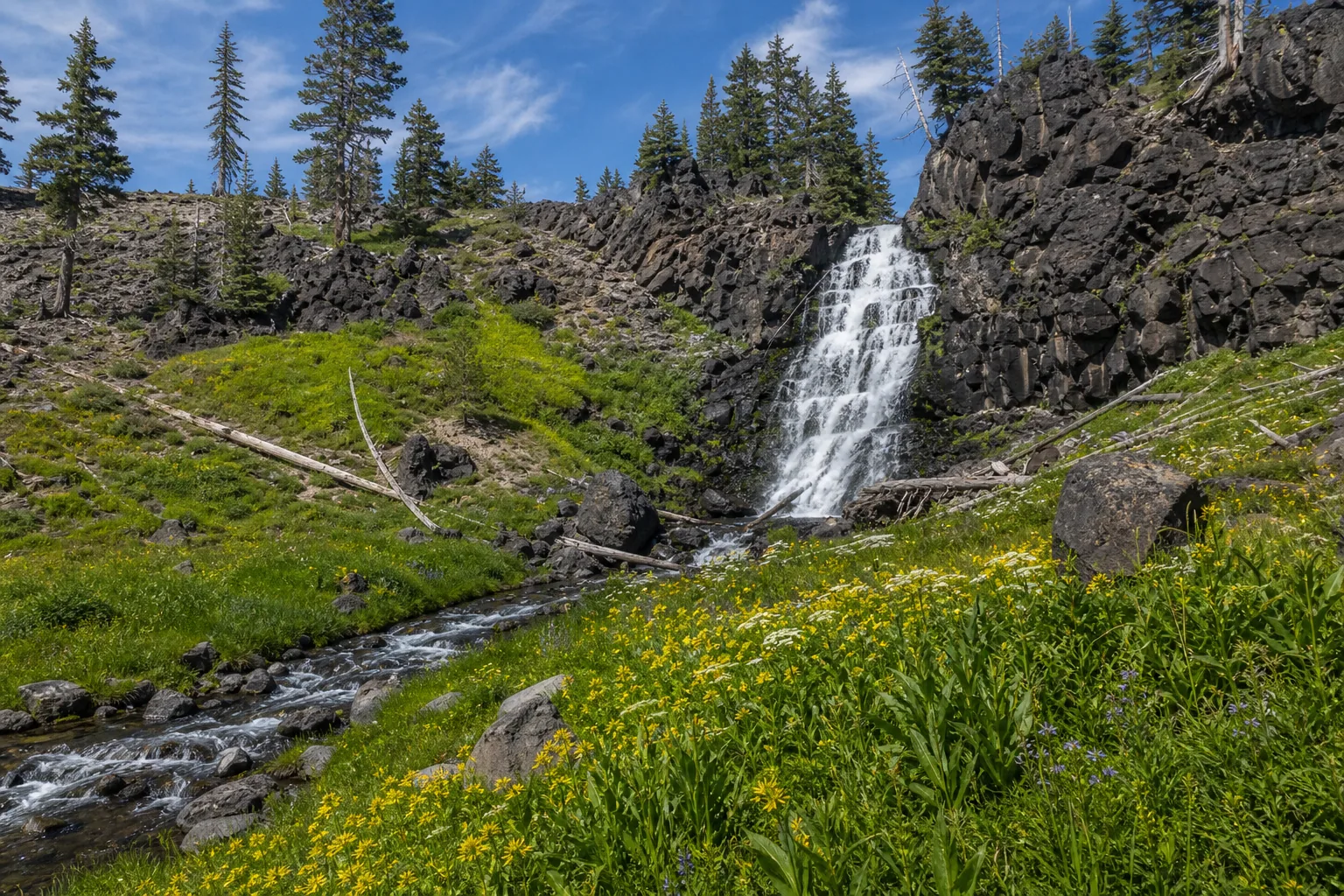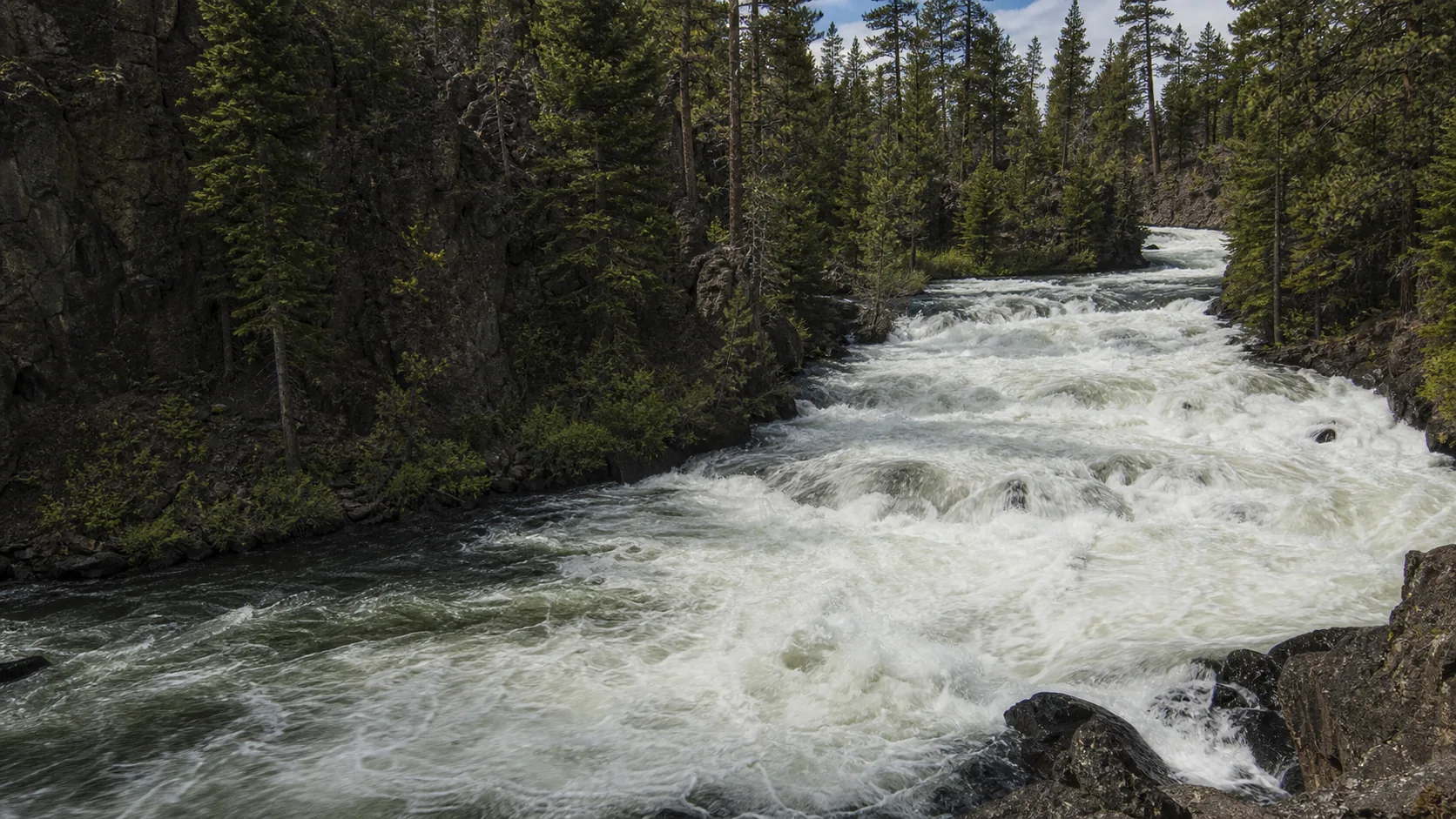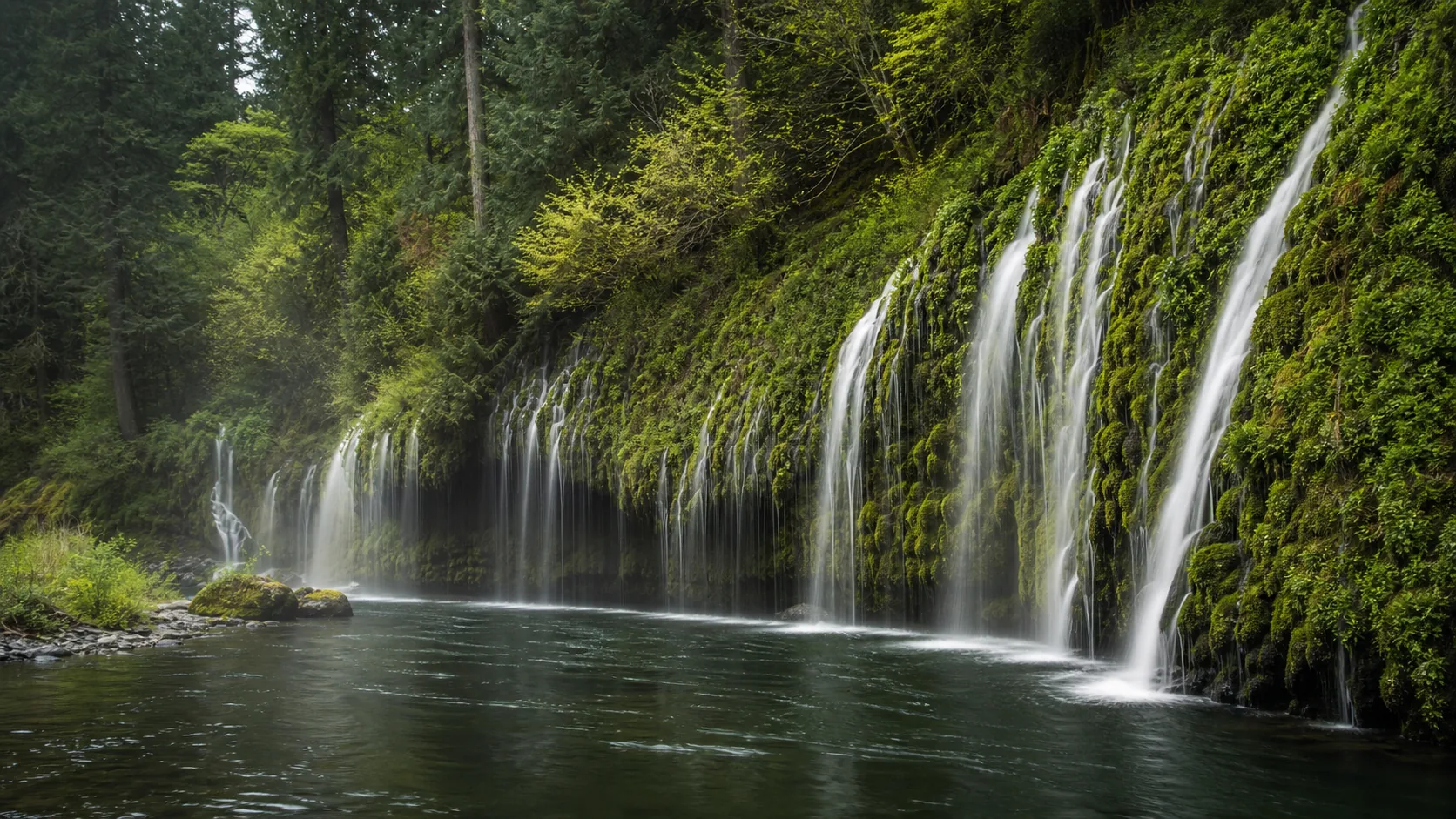
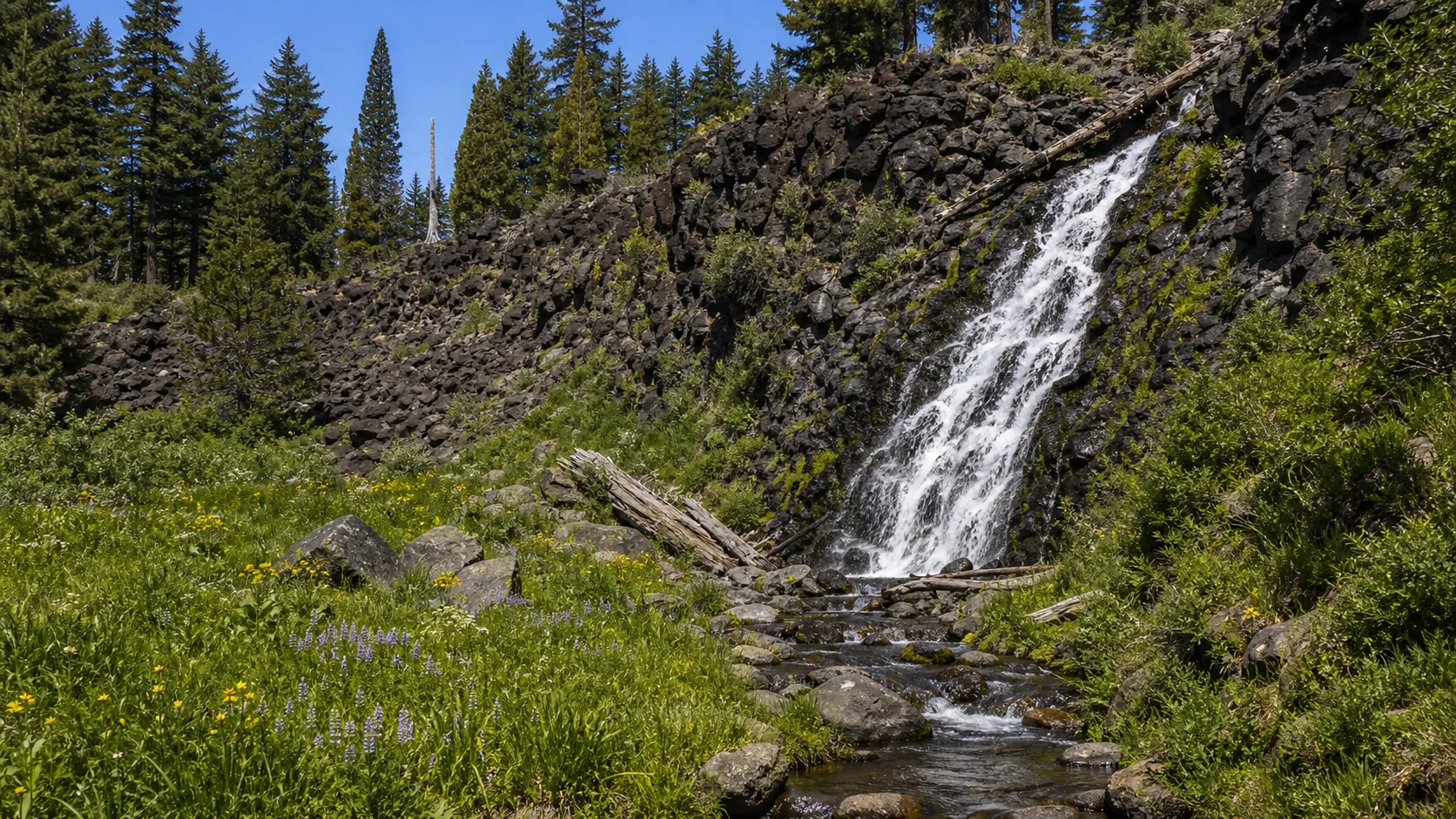
Plaikni Falls cascading through wildflower meadow in Crater Lake National Park
Crater Lake National Park, OR

Plaikni Falls

Plaikni Falls is a 20-foot spring-fed cascade tumbling through a wildflower meadow on the south flank of Mount Scott in Crater Lake National Park. The 2.0-mile out-and-back trail leaves Pinnacles Road, the seasonal spur off East Rim Drive, and climbs gently through old-growth hemlock and fir to the meadow basin. Among the side trips at Crater Lake, it is the one waterfall hike that rewards a real walk rather than a roadside pullout, and the water is not snowmelt but groundwater rising out of the Pumice Desert aquifer.

Last verified May 12, 2026 Visited Desk-verified May 2026 7 sources checked
Trail 2.0 mi Round-trip route varies
Time 60-90 min Easy
Best season Mid-July through late September (Pinnacles Road open; wildflower peak) Year-round steady (spring-fed)
Parking Trailhead lot off Pinnacles Road; park entrance fee $30 per vehicle covers parking. Lot fills on July and August weekends. Crater Lake National Park
Quick answer

Is Plaikni Falls worth visiting today?

Yes if Pinnacles Road is open, which is roughly early July through late October depending on snowpack. The best window is mid-July through mid-August for the wildflower meadow at the falls (paintbrush, monkeyflower, lupine), with September a quieter close runner-up. Plan on the $30 per-vehicle park entrance fee or the $80 federal Interagency Annual Pass, no dogs on the trail, and check the current NPS road status before driving the 7-mile Pinnacles Road spur.

  • 2.0 mi round trip from Pinnacles Road
  • Open July through October only
  • Wildflower peak: mid-July to mid-Aug
  • $30 park entrance fee per vehicle
  • First 3/4 mi wheelchair-accessible
  • No dogs on trail; no drones in park
Last verified May 12, 2026 Visited Desk-verified May 2026 7 sources checked
Distance 2.0 mi Loop distance varies
Round trip 60-90 min 2.0-mile out-and-back, about 130 ft elevation gain, mostly gentle grade through old-growth hemlock and fir
Difficulty Easy 2.0-mile out-and-back, about 130 ft elevation gain, mostly gentle grade through old-growth hemlock and fir
Location Crater Lake National Park, OR Crater Lake National Park
Parking Trailhead lot off Pinnacles Road; park entrance fee $30 per vehicle covers parking. Lot fills on July and August weekends. NPS
Transit No fixed-route transit; private vehicle required Crater Lake National Park trolley operates summer Rim Drive only; does not reach Pinnacles Road · 0 ft
Drive 60 mi 90 min from downtown
Best season Mid-July through late September (Pinnacles Road open; wildflower peak) Year-round steady (spring-fed)
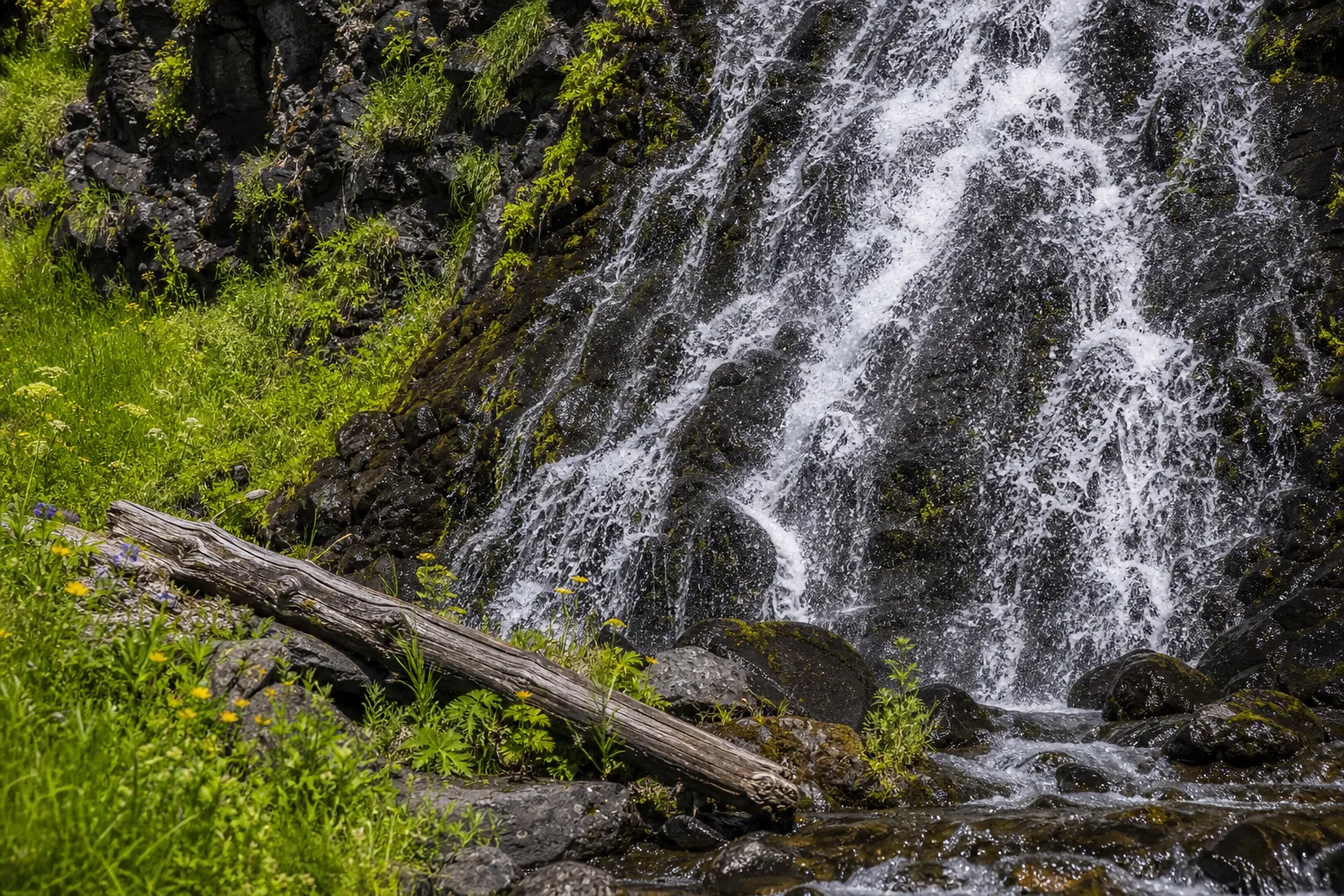
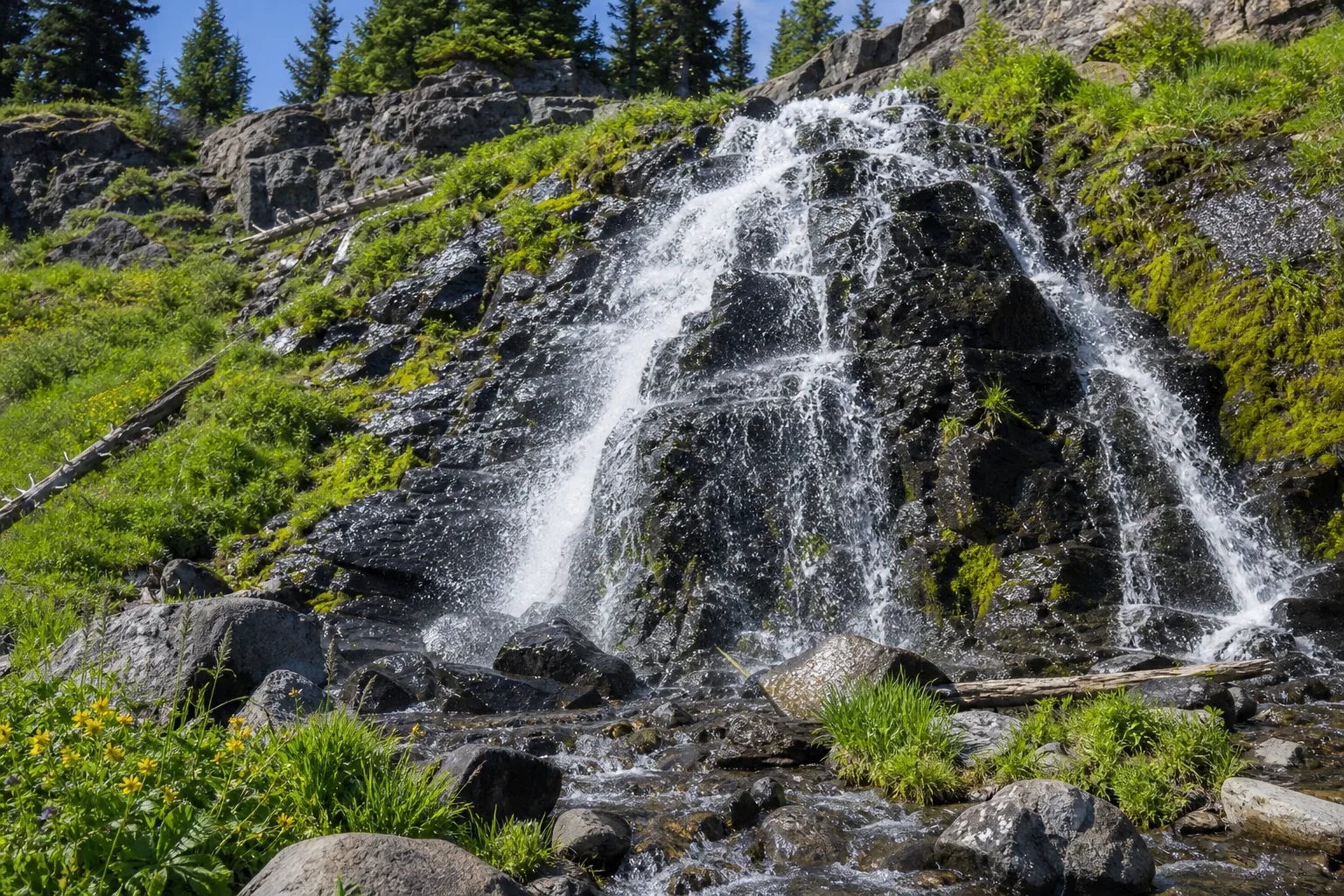
Plaikni Falls base of the falls where spring-fed water cascades over volcanic rock from the pumice desert aquifer
Photo guide

Three frames on a meadow-fed spring cascade.

Plaikni is unusual in the Crater Lake set because it is a meadow falls, not a canyon falls. The frames here are the wildflower foreground in July, the spring discharge detail, and the wide meadow composition.

Plaikni Falls cascading through wildflower meadow in Crater Lake National Park
Plaikni Falls, hero composition
Plaikni Falls 20-foot spring-fed cascade in a wildflower meadow at Crater Lake National Park
The 20-foot cascade and meadow setting at the end of the 1-mile spur off Pinnacles Road
Plaikni Falls base showing spring-fed water cascading over Mount Mazama volcanic rock
Base of the falls where spring-fed water cascades over volcanic rock from the Pumice Desert aquifer
Plaikni Falls water and volcanic rock detail near the spring outflow
Water and rock detail showing the porous pyroclastic substrate that filters the spring discharge
01Is Plaikni Falls flowing right now?

This guide does not currently pair Plaikni Falls with a verified real-time USGS discharge gauge because the spring-fed water source does not have a nearby instrumented station. The flow chip is intentionally hidden.

Plaikni runs from the Pumice Desert aquifer rather than from surface snowmelt, which is why the flow stays roughly steady from July through October. There is no live USGS gauge on the falls itself; the nearest paired gauge is on Sand Creek about 14 km away and is not a faithful proxy for the spring discharge.

02How long is the walk?

The Plaikni Falls Trail is a 2.0-mile out-and-back from the Pinnacles Road trailhead, about 130 ft of elevation gain on a gentle grade. Most visitors finish the round trip in 60 to 90 minutes including time at the falls.

03How do you get there?

From Rim Village, drive Rim Drive east about 24 miles to the Pinnacles Road junction on East Rim Drive. Turn south on Pinnacles Road and continue about 6 miles; the Plaikni trailhead is signed on the right. From Highway 62 at the south entrance, follow the south entrance road to East Rim Drive and then Pinnacles Road.

04Is there free parking?

Free trailhead lot at the Plaikni Falls trailhead off Pinnacles Road; access is included with park entrance. The lot is small and fills on July and August weekends by mid-morning. Arrive before 10 a.m. or after 3 p.m. for the cleanest experience.

05Does it cost money?

Yes. The Crater Lake National Park entrance fee is $30 per vehicle for a 7-day pass, $25 for motorcycle, or $15 per person for bicycle or foot entry. The $80 federal Interagency Annual Pass and the $80 Senior lifetime pass are honored. No additional Plaikni-specific fee.

06Trail variants

Standard out-and-back 2.0 mi round trip, 60-90 min, 1.0 mi each way from Pinnacles Road trailhead, about 130 ft gain.
Accessible first segment First 3/4 mi accessible, 30-45 min round trip on accessible section, Initial paved/firm grade is wheelchair-suitable per Travel Oregon; the final approach to the falls is unpaved.
Wildflower-focused visit 2.0 mi, 90 min with photo stops, Mid-July through mid-August for paintbrush, monkeyflower, lupine in the meadow at the falls.
Plaikni and Pinnacles combo 2.8 mi total (2.0 Plaikni + 0.8 Pinnacles), 2-3 hr including drive, Drive to the end of Pinnacles Road after Plaikni for the 0.8-mile Pinnacles overlook trail.

Detailed maps and recent reviews: Falls route on AllTrails · Creek route on AllTrails

07Can you swim?

No. Swimming, wading, and off-trail travel are not permitted at Plaikni Falls. The meadow basin is protected; stay on the constructed trail and the viewing area.

08Are dogs allowed?

No. Pets are not allowed on the Plaikni Falls Trail. Crater Lake NPS limits dogs to roads, parking areas, picnic areas, and developed campgrounds. There is no on-trail exception for leashed dogs.

09Is it accessible?

The first three-quarters of the Plaikni Falls Trail is graded and surfaced for wheelchair access per Travel Oregon and Southern Oregon tourism listings; the final approach to the falls transitions to natural surface. The trailhead lot has accessible parking. Restrooms are at Pinnacles Road pullouts rather than the trailhead itself.

Field notes

Plaikni at a glance.

20-foot spring-fed cascade in a wildflower meadow off Pinnacles Road, $30/vehicle Crater Lake NP entrance, road open roughly July through September. Sourced from the NPS Crater Lake trail page and the USGS Yellowstone-Cascades aquifer mapping.

Height 20 ft USGS 3DEP
Type Cascade (spring-fed) USGS
Rock Mount Mazama pyroclastic deposits (pumice, ash, andesite) USGS Cascades Volcano Observatory: Mount Mazama and the Crater Lake caldera
County Klamath Crater Lake National Park, OR
Managed by National Park Service NPS
Water source Pumice Desert aquifer spring discharge USGS
Elevation 6275 ft USGS NED
Park area 183,224 acres NPS
Hours Park open 24 hours; Pinnacles Road typically open early July through late October, weather permitting NPS
When to visit

July through September, peak wildflower in early August.

Pinnacles Road is the seasonal gate. It usually opens by Fourth of July and closes with the first heavy snow in October. The wildflower super-bloom in the meadow peaks in early August.

PEAK FLOW

Peak flowYear-round steady (spring-fed)
Ice / low flowTrail closed by snow Nov-Jun
Most crowdedWeekends and midday
Best photosSunrise or weekdays

Live water context

Discharge data -- This guide does not currently pair Plaikni Falls with a verified real-time USGS discharge gauge because the spring-fed water source does not have a nearby instrumented station. The flow chip is intentionally hidden.

Why is it called Plaikni Falls?

Plaikni is from the Klamath language and translates roughly to from the high country or from the upland. The National Park Service adopted the name after consultation with the Klamath Tribes in advance of the trail's opening in 2011, restoring a place name in the language of the people who lived in this country long before Mount Mazama's caldera became Crater Lake.

The naming is a small but pointed act of cultural restoration in a park whose English-language toponyms (Mount Scott, Garfield Peak, Llao Rock) trace mostly to nineteenth-century explorers and surveyors. Visitors writing about the falls sometimes spell it Plianki or Plyikni; the NPS-approved spelling is Plaikni.

What else to do at Crater Lake National Park

Crater Lake National Park covers 183,224 acres of high Cascades around the deepest lake in the United States (1,949 ft at maximum sounding). Plaikni Falls is on the eastern side of the park, reached from Pinnacles Road, a 7-mile seasonal spur that leaves East Rim Drive and ends at the Pinnacles overlook (a band of erosion-resistant pumice spires standing above Sand Creek Canyon).

Most visitors base at Rim Village on the west side and drive the full Rim Drive loop; Plaikni and the Pinnacles are the two short stops that turn the east half of the loop into a worthwhile day rather than a transit. Rim Drive and Pinnacles Road both close with the first heavy snow (typically late October) and reopen after plowing in late June or early July.

  • Trailhead off Pinnacles Road. The 7-mile Pinnacles Road leaves East Rim Drive and ends at the Pinnacles overlook; the Plaikni trailhead is about a mile before the end on the right.
  • Old-growth approach. The first 0.75 mi runs through mature mountain hemlock and Shasta red fir on a graded surface that is wheelchair-accessible per Travel Oregon and Southern Oregon tourism listings.
  • Meadow at the falls. The final approach opens into a wildflower basin (paintbrush, monkeyflower, lupine, columbine in season) with the 20-foot cascade as the back wall.
  • Spring-fed flow. The water emerges from the Pumice Desert aquifer rather than from surface snowmelt, so flow is steady July through October rather than peaking in May like most Cascade falls.
  • Pinnacles combo. The 0.8-mile Pinnacles Trail at the end of Pinnacles Road reads as a natural second stop after Plaikni; the spires are erosion remnants of welded pumice from the Mazama eruption.

Why it looks this way

Plaikni Falls runs because the porous pumice and ash blanket left by Mount Mazama's caldera-forming eruption (USGS dates the event at roughly 7,700 years ago) acts as a deep, slow-draining aquifer. Snowmelt and rain percolate through the Pumice Desert north of the caldera and through the tephra apron that buries Mount Scott's lower flank, and the water reemerges at springs where the porous deposits meet less permeable bedrock. The falls is the visible end of that subsurface system.

That spring-fed mechanic is why Plaikni reads almost the same in July and in September while typical Cascade snowmelt waterfalls drop by two-thirds. It also explains the meadow setting, which is unusual for an Oregon waterfall: there is no incised canyon because the water did not cut down to this point from a high snowfield; it simply surfaced here.

Field guide deep dive

What you cannot tell from a Tripadvisor listing.

Spring-fed hydrology, the Pinnacles Road seasonal window, the Klamath-language name, and how Plaikni reads next to Vidae Falls on the other side of the loop.

How Plaikni Falls formed (and why it is spring-fed rather than snowmelt)

Mount Mazama, the volcano whose collapsed summit caldera now holds Crater Lake, blew apart in a caldera-forming eruption that the USGS Cascade Volcano Observatory dates to roughly 7,700 years ago. The event ejected an estimated 50 cubic kilometers of magma as ash and pumice. The lighter pumice and ash blanket settled north and east of the volcano, building the Pumice Desert, a flat, sparsely vegetated plain visible today from the north entrance road, and burying the lower flanks of the surrounding peaks including Mount Scott.

That pumice-and-ash blanket is unusually porous. Snowmelt and rain percolate through it almost without runoff, build a slow-moving groundwater body, and reemerge at springs where the porous deposits meet less permeable older bedrock. Plaikni Falls is the visible end of one of those subsurface paths. The water is not snowmelt the way nearly every other Cascade waterfall is; it is groundwater rising at a contact, and it has spent years or decades underground before it arrives at the lip.

The practical consequence is the one that matters to a visitor: Plaikni runs cleanly in July, August, September, and well into October, while typical surface-fed Cascade falls drop by half or more after the snowpack runs out in late June. The volume is modest (the falls is 20 feet tall and the channel is narrow) but the volume is steady.

Pinnacles Road and the seasonal access window

Plaikni Falls is reached by Pinnacles Road, a 7-mile spur that leaves East Rim Drive on the east side of the caldera and ends at the Pinnacles overlook above Sand Creek Canyon. The road is plowed in late June or early July depending on the year's snowpack and the NPS plow schedule, and it closes with the first sustained snow event in October or early November. Outside that window, the trailhead is unreachable.

Pinnacles Road also closes intermittently within the operating season for storms, downed trees, or wildfire smoke. The NPS Crater Lake current conditions page is the canonical check; the park is consistent about posting road status in the morning before the day's traffic builds. From the Pacific Crest Trail and Crater Lake village side (the west rim), getting to Plaikni is a half-loop drive of about 24 miles around the eastern caldera rim, roughly 45 minutes to the trailhead.

The trailhead lot is small (about a dozen spaces) and fills by mid-morning on July and August weekends. The cleanest experience is to arrive before 10 a.m. or after 3 p.m., which is also the better photographic light for the meadow.

Wildflower season: what blooms in the meadow at the falls

The Plaikni meadow basin holds one of the more reliably timed wildflower displays in Crater Lake National Park because the spring-fed water keeps soil moisture even into late summer. Peak bloom is roughly mid-July through mid-August, with some years extending into the first week of September.

The species visitors are most likely to identify are scarlet paintbrush (the bright red-orange spikes that read first in photos), Lewis's monkeyflower (magenta, clustered close to the spring outflow and stream channel), broadleaf lupine (the purple-blue spires on the drier meadow margins), and columbine (yellow-and-red bells in shaded edges). In wet years the meadow also carries shooting star in early July and aster and fireweed after the first cool nights in mid-August.

Crater Lake NPS asks visitors to stay on the constructed trail and viewing area in the meadow. The shallow soil and the spring habitat are easy to trample, and the wildflowers are slow to recover after a single rough season.

Plaikni vs Vidae Falls: the two short stops on Rim Drive

There are two named waterfalls that visitors actually stop at on Crater Lake's Rim Drive loop, and they are different problems.

Vidae Falls is on the south side of the loop about 3 miles east of Park Headquarters, a roughly 100-foot drop in a series of small cascades visible from a roadside pullout. It is essentially a five-minute photo stop with no trail; the view is from a paved pullout and a short walk along the road shoulder. The water is seasonal snowmelt, so the falls is its strongest in late June and early July and is reduced to a trickle by September.

Plaikni Falls is the opposite problem. It requires a 2-mile round trip walk from a different road (Pinnacles Road, not Rim Drive), and the falls is modest at 20 feet, but the experience is the meadow basin and the spring-fed steady flow rather than the height. The two stops complement each other on the same day: Vidae for the roadside photo, Plaikni for the hike and the meadow.

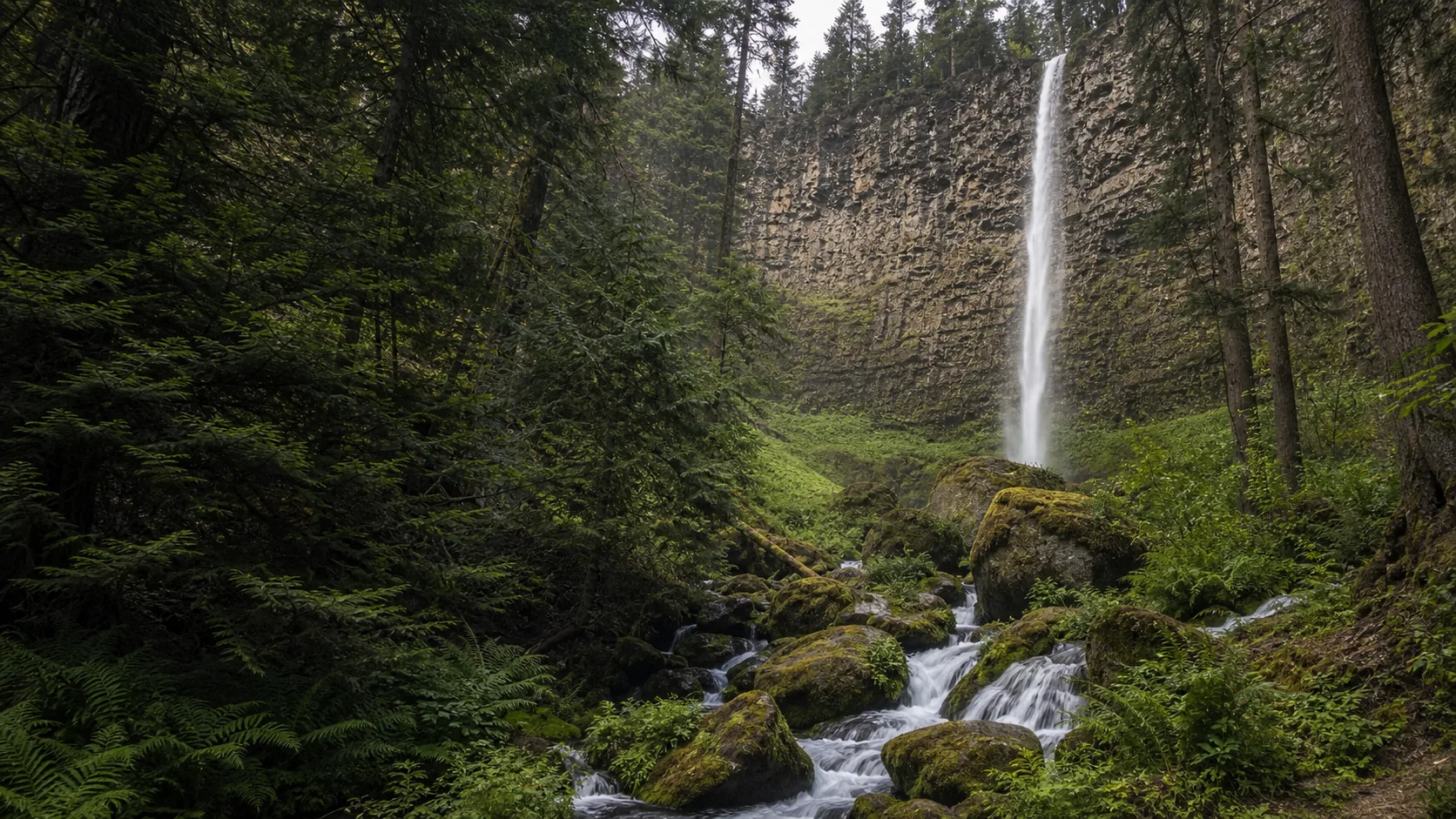
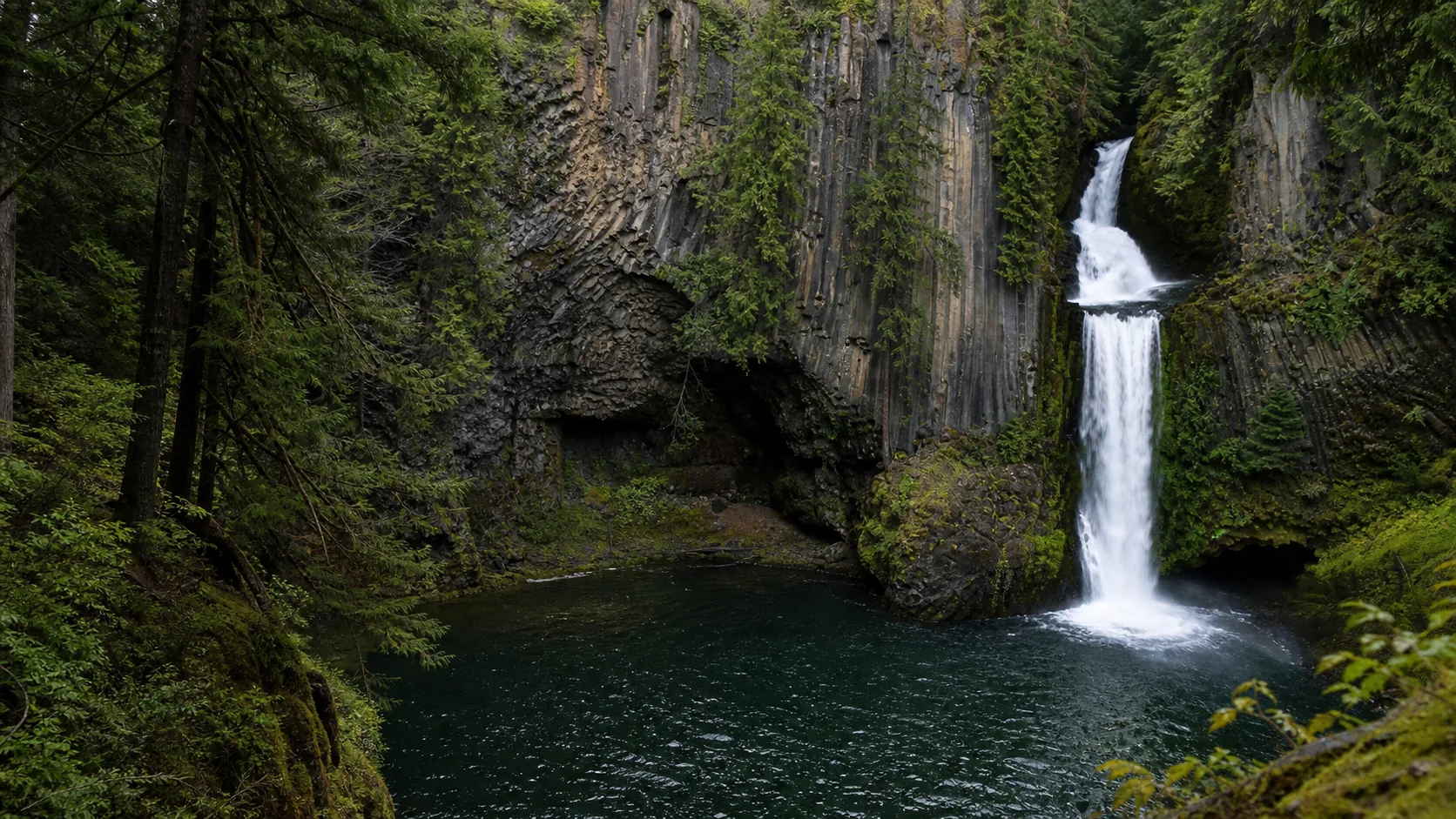
Beyond the park boundary, the other Oregon waterfall stops worth pairing on a longer road trip are the North Umpqua corridor pair, Toketee Falls and Watson Falls, both about a 90-minute drive west from Crater Lake on Highway 138.

The Klamath language name and the 2011 trail opening

Plaikni comes from the Klamath language and translates roughly to from the high country or from the upland. The National Park Service adopted the name after consultation with the Klamath Tribes ahead of the trail's opening in 2011, restoring a place name in the language of the people who lived in this country long before the Mazama caldera filled and became Crater Lake.

That kind of consultation-driven naming is more common in park renaming projects since the 2010s than it was in the nineteenth-century era when most Crater Lake toponyms were assigned. Mount Scott was named for Levi Scott, an Oregon pioneer; Llao Rock takes a name from a Klamath story (Llao, the spirit of the underworld) but in a romantic-era spelling that the modern Klamath community has flagged as imprecise. Plaikni is the cleaner act: a Klamath-language name, NPS-coordinated with the Klamath Tribes, applied to a newly constructed trail and to the falls itself rather than retrofitted onto a feature with a competing English label.

The Klamath Tribes are the federally recognized confederation of the Klamath, Modoc, and Yahooskin Band of Snake people, headquartered today in Chiloquin, Oregon, about 30 miles south of the park. The tribes' Culture and Heritage Department is the appropriate canonical reference for the language and the historical context of the place; the NPS Crater Lake page on Plaikni Falls also credits the consultation explicitly.

Photographing the meadow-and-cascade composition

Plaikni is a wide-frame waterfall rather than a tall one, which is the opposite of most popular Cascade falls. The working composition is horizontal: the 20-foot cascade reads as the back wall of the meadow basin, with wildflowers in the middle ground and the spring stream curving through the foreground. A 24-70mm equivalent covers both the wide meadow context and the tighter water-and-rock detail near the outflow; a longer lens is unnecessary because the viewing area is close.

Light is the variable. The meadow opens roughly to the south-southwest, so midday sun is harsh on the wildflowers and washes out the pale volcanic rock behind the falls. The cleanest hour is the first hour after the meadow comes into shadow in late afternoon, typically 4 to 5 p.m. in late July and 3 to 4 p.m. in late September. Overcast days are forgiving and let the wildflower colors saturate without highlight clipping.

Carry a polarizer to manage the glare off the spring stream, and consider a small tripod for the slower meadow shutter speeds; the viewing area is constructed but stable. Drones are prohibited park-wide under Crater Lake's 36 CFR 1.5 closure, so plan ground-level compositions. The narrow viewing area also means a busy weekend can be challenging for a single uncluttered frame; weekday morning or a late-afternoon weekday in September is the cleanest window.

Map and route

Off Pinnacles Road, southeast quadrant of Crater Lake NP.

From Rim Village, drive Rim Drive east about 24 miles to the Pinnacles Road junction on East Rim Drive. Turn south on Pinnacles Road and continue about 6 miles; the Plaikni trailhead is signed on the right. From Highway 62 at the south entrance, follow the south entrance road to East Rim Drive and then Pinnacles Road.

Photography and weddings

East-facing meadow, soft light all day, no commercial permit for personal photography.

The Plaikni shot most people walk in for is the wide meadow-and-falls composition: 20-foot cascade as the back wall, wildflowers in the middle ground, a single horizontal frame that places the falls in its basin. The narrower water-and-rock detail near the spring outflow is the second working composition, and a downstream perspective from the meadow back toward the cascade reads as a third.

The meadow opens to the south-southwest, which means midday light is harsh on the meadow but the falls itself stays partly shaded by the rim above. The cleanest hour is the first hour after the meadow comes into shadow in late afternoon, when the wildflowers stay lit but the cascade reads with detail. Overcast days work all day and are the easiest setup for white balance against the pale volcanic rock.

Personal photography is fine from the trail and the constructed viewing area. Drones are prohibited park-wide. Commercial filming, large-group portrait sessions, and any setup that blocks the narrow viewing area require a Crater Lake NPS special-use permit (separate application, fee scales with crew size).

Permits

Weddings and engagements

Plaikni can work for small elopement portraits when the meadow is dry and the viewing area is uncrowded, but Crater Lake NPS treats wedding events under its special-use permit system rather than as casual photography.

Crater Lake NPS special-use permits for weddings start at a $100 minimum application fee and require advance coordination; the park does not permit ceremonies or amplified sound at every backcountry location, and Plaikni's narrow viewing area is not configured for full ceremony staging.

Keep the setup small (couple plus officiant plus one or two witnesses), avoid blocking the viewing area for other visitors, and choose a weekday in late July or August when the meadow is at peak bloom but the lot is not full.

Nearby waterfalls

Three Crater Lake stops on the same Mt Mazama ash deposit.

Plaikni pairs naturally with the Vidae Falls roadside cascade, the Pinnacles ash-spire overlook, and the Crater Lake rim drive. All three sit on the volcanic stratigraphy laid down by the Mazama eruption 7,700 years ago.

Related questions

More questions visitors ask before driving to Plaikni.

Trail length, road seasonality, accessibility, the Klamath-language name, and the $30 NP entrance. All entries also index in the FAQ schema for AI answer engines.

01How tall is Plaikni Falls?

Plaikni Falls is approximately 20 feet tall, cascading over Mount Mazama volcanic rock at the back wall of a wildflower meadow basin. It is a short, spring-fed cascade rather than a tall plunge; the appeal is the meadow setting and the steady year-round flow, not the height.

02When is Plaikni Falls open?

Access depends on Pinnacles Road, which is typically open early July through late October. The road closes with the first heavy snow and reopens after plowing in late June or early July; exact dates vary year to year. The falls itself runs year-round from the Pumice Desert aquifer, but it is unreachable in winter.

03What does Plaikni mean?

Plaikni is from the Klamath language and translates roughly to from the high country or from the upland. The National Park Service adopted the name after consultation with the Klamath Tribes before the trail opened in 2011, restoring a Klamath-language place name to a feature on the south flank of Mount Scott.

04Is Plaikni Falls worth visiting?

Yes if you are already at Crater Lake and the Pinnacles Road window is open, especially mid-July through mid-August when the wildflower meadow is at peak bloom. It is the one waterfall at Crater Lake that rewards a real walk rather than a roadside pullout, and the spring-fed flow means it still runs cleanly in September when Vidae Falls has dropped to a trickle.

Sources and data

Where the Plaikni guide gets its facts.

Road-opening calendar, trail map, and fees from the NPS Crater Lake National Park trail page. Geology from the USGS volcanic hazards program on Mt Mazama and the Crater Lake caldera. Etymology and Klamath Tribes consultation from the NPS cultural resources record.

NPS: Crater Lake National Park nps.gov
Access, parking, and permit rules: nps.gov
USGS Cascades Volcano Observatory: Mount Mazama and the Crater Lake caldera: Crater Lake National Park bedrock usgs.gov
NOAA / NWS Medford forecast grid MFR 138,94 noaa.gov
USGS National Elevation Dataset 3DEP
Google Maps: embedded map and directions maps.google.com
Google Places: nearby restaurants and hotels places API
NPS Crater Lake National Park: Plaikni Falls trail page nps.gov
USGS Cascades Volcano Observatory: Crater Lake and Mount Mazama usgs.gov
NPS Crater Lake: Fees and Passes nps.gov
NPS Crater Lake: Pets in the park nps.gov
The Klamath Tribes: Culture and Heritage klamathtribes.org
AllTrails: Plaikni Falls Trail (current reviews and conditions) alltrails.com
Wikipedia: Plaikni Falls en.wikipedia.org
Travel Oregon: Plaikni Falls accessibility detail traveloregon.com
Fact checks
Height audit: 20 ft cascade figure verified against Inspired Imperfection field report (Aug 16, 2017) and consistent with NPS and Wikipedia descriptions of a short spring-fed cascade rather than a tall plunge.
Park entrance fee audit: $30 per vehicle 7-day pass, $25 motorcycle, $15 per person bike or foot verified from the current NPS Crater Lake fees page (May 2026); federal Interagency Annual Pass at $80 is honored.
Road seasonality audit: Pinnacles Road typically opens late June or early July and closes with first heavy snow in October or early November, per NPS Crater Lake road status guidance. Dates vary year to year and should be confirmed before driving.
Naming audit: Plaikni from the Klamath language meaning from the high country, NPS-adopted via consultation with the Klamath Tribes for the trail's 2011 opening, per NPS Crater Lake park page and the Oregon Hikers field record (Aug 23, 2011).
Corrections: [email protected]